Email Drip Campaign Examples for Aesthetic Clinic Lead Nurture
A swipe file of clinic-specific email drip campaign examples, mapped to the way patients actually decide on a treatment, not to a generic ecommerce list.
TL;DR
- Generic email drip campaign examples are built for ecommerce lists, which is why they fall flat for a clinic nurturing a high-consideration treatment enquiry.
- The sequences that work for aesthetics map to the patient’s decision moment: fast acknowledgement, reassurance on safety, genuine before-and-after proof, then a clear next step.
- This post gives three copy-and-adapt examples: a new enquiry nurture, a post-consultation follow-up, and a treatment-cycle reactivation.
- Speed matters more than polish. The first automated reply should land in minutes, not the next morning.
- Stay inside the UK rules: rely on the soft opt-in, keep an easy unsubscribe, and never advertise prescription-only products like Botox.
Most email drip campaign examples you will find online assume you are selling trainers or a software subscription. Someone browses, you tag them, you send five discount emails, they buy or they do not. That model is useless to an aesthetic clinic, where a patient weighing up a treatment is nervous, price-aware, and researching for weeks before they commit.
In my experience, clinics rarely have a lead problem. They have a leak problem. Enquiries come in through the website, Instagram and the phone, then quietly go cold because nobody followed up in a structured way. A drip campaign is the fix for that specific leak, and the good news is the clinic version is more straightforward to set up than most owners expect.
What Is an Email Drip Campaign, in Plain Terms?
An email drip campaign is a short set of pre-written emails that sends automatically after a trigger, spaced over days so the clinic stays in touch without anyone lifting a finger. The trigger might be a new enquiry, a consultation that did not convert, or a set gap since the patient’s last visit.
The word “drip” is the point. Instead of one big send, the messages arrive a few at a time, each one doing a single job. That matters because 73% of leads are not ready to buy at the moment they first make contact. A single “book now” email asks for a decision the patient has not reached yet. A sequence gives them room to get there.
Why Generic Drip Campaign Examples Fall Short for Clinics
They fail because they treat a £400 treatment decision like a £40 impulse buy. An aesthetic patient is not comparing shipping speeds, they are asking whether the practitioner is safe, whether the result will look natural, and whether they can trust this clinic with their face.
That changes what each email has to carry. Ecommerce drips lean on urgency and discounts. Clinic drips lean on reassurance and proof. The research backs the shape: companies that nurture leads properly generate 50% more sales-ready leads at a third lower cost, and email as a channel still returns around £42 for every £1 spent. The lever is not sending more, it is sending the right thing at the right moment.
This all sits under securing every enquiry. Capture the enquiry, then let the sequence do the patient work the front desk never has time for on a busy Saturday.
Example 1: The New Enquiry Nurture Sequence
This is the one every clinic needs first. Someone enquires about a treatment, does not book straight away, and without a sequence they simply drift off. Here is a five-touch example you can adapt today.
Touch 1, within minutes: acknowledge and set expectations. Subject: “Thanks for your enquiry, here is what happens next.” Confirm you have their message, tell them who will be in touch and when, and answer the one question almost everyone asks about that treatment. Speed is not a nice-to-have here. The odds of qualifying a lead if you respond within 5 minutes rather than 30 are dramatically higher, and firms that reply inside an hour are 7 times more likely to have a real conversation.
Touch 2, next morning: reassure on safety. Subject: “What to expect at your consultation.” Walk through how the consultation works, who the practitioner is, and the qualifications and standards behind the clinic. This is where a nervous first-timer either relaxes or drops off.
Touch 3, day 3: show proof. Subject: “Real results from patients like you.” Share genuine, consented before-and-after images and a couple of honest reviews. Do not retouch the images and do not overclaim, because the ASA rules on cosmetic marketing are strict about this.
Touch 4, day 5: make the next step easy. Subject: “Shall I hold a callback slot for you?” One clear action. A link to book, or an offer to hold a callback time. No pressure, just a low-friction door.
Touch 5, day 9: last direct nudge. Subject: “Still thinking it over?” Acknowledge that timing might not be right, invite a reply with any questions, then move them to a slower monthly nurture rather than deleting them.
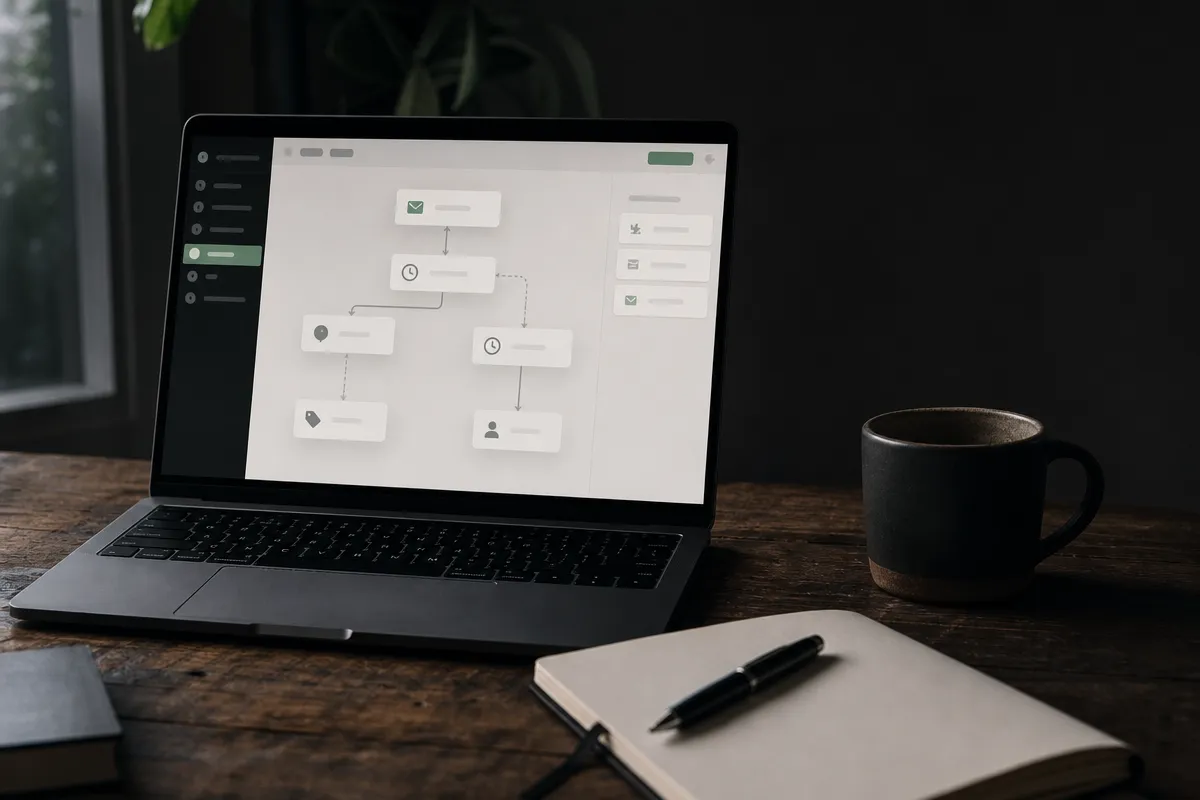
You do not have to build this by hand every time. This is exactly what automated follow-up is for: the sequence runs in the background and stops the second the patient books.
Example 2: The Post-Consultation Follow-Up Sequence
This sequence catches the warm leads clinics lose most often: the patient who had a consultation, said they would think about it, and never came back. The interest is already there, so this is shorter and more direct than the new enquiry drip.
Touch 1, same day: thank you and recap. Subject: “Great to meet you today.” Thank them, summarise what was discussed, restate the plan the practitioner suggested, and include a simple way to book. Sending this while the conversation is fresh does most of the work.
Touch 2, day 2: handle the real hesitation. Subject: “The questions most people ask after a consultation.” Address the honest blockers for that treatment: downtime, aftercare, what results are realistic. If price is the sticking point, be straight about it rather than dodging.
Touch 3, day 5: keep the door open. Subject: “Happy to answer anything by message.” Remind them the consultation notes and any quote still stand, and offer to answer quick questions by WhatsApp. A lot of patients will not book off an email but will reply to a text.
Touch 4, day 10: final nudge, then nurture. Subject: “Before I close your file.” A last gentle prompt, then move them into the reactivation list so you check back in future.
Example 3: The Treatment-Cycle Reactivation Sequence
Reactivation is a treatment-cycle problem, not a send-more-emails problem. The best sequence here is built around when a patient is naturally due, not a random calendar reminder. Segment the database by 3, 6, 12 and 18-plus months, then tie each segment to the treatment cycle.
A skin course patient is on a different rhythm to someone who came in for a one-off consultation. Map the timing to the treatment, then run a short sequence for each due segment:
Touch 1: the timely reminder. Subject: “You are due a check-in.” Frame it around results, not sales. If they leave it too long, they lose the benefit of staying on schedule, so the reminder is genuinely useful to them.
Touch 2, a few days later: the reason why. Explain briefly why timing matters for that treatment and what tends to happen when patients drift off their cycle.
Touch 3: the easy rebook. One link, one held slot, one clear next step.
I hold a strong view on this: automation should not replace the relationship, it should automate the logistics so the team can be more present when it matters. The reactivation drip is not there to nag people. It is there so a good patient never slips through the cracks because the clinic got busy. When this runs on its own, you get the patient retention upside without adding a job to anyone’s week, which is the whole point of the Freedom Through Systems pillar.
Should You Use Email or SMS for Clinic Drips?
Use both, because they do different jobs. Email carries the detail, the reassurance and the before-and-after proof. SMS is better for the time-sensitive touches, because texts get opened fast: SMS open rates sit around 98% against roughly 20% for email.
So the pattern that works is a mix. Send the reassurance and proof by email, then use a short SMS for the held-slot reminder or the “your callback is in an hour” prompt. Trigger the messages off the patient’s actions rather than blasting the whole list. Triggered emails open at around 30% versus 20% for a standard batch send, and segmented campaigns beat generic ones across the board.
How Many Emails Should a Clinic Drip Campaign Have?
For a new enquiry, four to five emails over about ten days is usually enough, then move the contact to a slower monthly nurture. A post-consultation sequence is shorter, around three to four emails, because the interest is already warm.
The honest answer is that the right number is the one that stops when the patient books. Every email in the sequence needs a clear next step, and the moment they act, the drip should end so you are never emailing someone who has already said yes. That only works if the sequence is connected to your capture and booking view, not running as a separate tool nobody checks.
What Makes These Sequences Actually Work
The sequences are only as good as the layer behind them. A drip campaign that starts an hour late, or fires generic emails at a list you cannot segment, will underperform no matter how good the copy is. The two things that decide the result are speed and relevance.
Speed comes from removing the team from the first response. The instant acknowledgement should be automatic, which is what an AI receptionist and instant text-back handle, so the sequence starts the moment the enquiry lands rather than whenever someone next checks the inbox. Relevance comes from every enquiry landing in one tracked place, so the right sequence fires for the right patient.
Frequently Asked Questions
What is an email drip campaign for a clinic?
It is a short sequence of pre-written emails that goes out automatically after someone enquires or after a set gap since their last visit. Each email is timed and triggered by an action, so the clinic stays in touch without anyone remembering to send anything. For an aesthetic clinic, the job is to answer the enquiry, build trust in the treatment, and make the next step easy.
How many emails should be in a clinic drip sequence?
For a new enquiry, four to five emails over about ten days is usually enough, then move the contact to a slower monthly nurture. A post-consultation sequence is shorter, around three to four emails, because the interest is already warm. Reactivation depends on the treatment cycle. The right number is the one that stops when the patient books, so every email needs a clear next step.
Is it legal to send marketing emails to clinic enquiries in the UK?
In most cases yes, if you rely on the soft opt-in. Under the ICO rules on electronic mail marketing, you can email people who gave you their details during an enquiry about similar treatments, as long as you offered an opt-out at the point of capture and include an easy unsubscribe in every email. If none of those conditions are met, you normally need consent first.
Can I mention Botox in a drip campaign email?
No. Botox is a prescription-only medicine, and the ASA says it cannot be advertised to the public, including indirect references like anti-wrinkle injections in a subject line or offer. You can talk about consultations, skin health and general treatment areas, but keep specific prescription-only product promotions out of your marketing emails.
Should clinics use email or SMS for follow-up?
Use both, for different jobs. Email carries the detail, the reassurance and the before-and-after proof. SMS is better for the time-critical touches like a held callback slot or a consultation reminder, because texts get opened far faster than emails. The strongest clinic sequences mix the two rather than choosing one.
Start With One Sequence
You do not need all three drips live by Monday. Pick the new enquiry nurture, write the five emails, and get the first one firing within minutes of an enquiry. That single sequence plugs the biggest leak most clinics have. Once it is running, add the post-consultation follow-up, then the reactivation drip.
If you would rather have the whole follow-up layer built and running for you, that is what we do. Book a call and we will go through your enquiries as they stand.
Want me to look at yours?
Thirty minutes with the person who would build it. Tell me what you do and where the work comes from now, and I will tell you straight whether a rebuild would change anything. If it would not, I will say so.
Book a callNot ready for a call? Take the slow road. One short email every Tuesday from Surinder: one thing to check on your own website, phone line or reviews. Five minutes, no ads.