Business Automation for Owner-Operated Clinics: The Right Order
How to automate an owner-operated clinic in the right order: capture first, then local trust, then marketing follow-up, then the systems that free you.

TL;DR
- Business automation for an owner-led clinic is not a tech project. It is about getting your time back and stopping revenue leaking out of a business that already has enquiries coming in.
- Automate in the right order. Start where the leak is biggest, not where the software looks shiniest.
- One sequence gives you that order: secure every enquiry, establish local trust, market on top of it, then build the systems that free you.
- Capture comes first because slow first responses lose the most bookings. Trust, follow-up and owner-freedom systems build on top of it.
- Automation should handle the logistics so your team is more present, not replace the people patients actually want to speak to.
Business automation gets sold as a big, complicated tech upgrade. For an owner-operated aesthetic clinic, that framing is wrong. The automation of business processes in a clinic is really about one thing: doing the repeatable work without a human having to remember it, so you get your evenings back and stop losing bookings you already earned.
I have spent about 20 years in this industry. I built, franchised and sold a group of 9 clinics and managed more than 60 staff along the way. The pattern I saw again and again is simple. Most established clinics do not have a lead problem. They have a leak problem. Enquiries are already arriving, but missed calls, slow replies, weak follow-up and no-shows quietly drain the revenue out of the business. Automation done well plugs those leaks. This is the walkthrough I wish more owners had before they bought another tool.
What Does Business Automation Actually Mean for a Clinic?
Business automation means letting software handle the repeatable logistics around enquiries, bookings, reviews and follow-up so they happen every time without someone remembering to do them.
That is a narrower and more useful definition than the one most software companies use. It is not about a robot running your clinic. McKinsey’s research on automation found that around 60% of jobs have at least 30% of their tasks that could be automated with current technology, with routine data tasks among the highest-potential of all. In a clinic, those routine tasks are the front-desk logistics: answering the missed call, sending the first reply, chasing the review, nudging the no-show.
My strong belief here, after years of watching teams drown in this work, is that automation should not replace the relationship. It should automate the logistics so the team can be more present when it actually matters. The consultation, the reassurance, the warm closing conversation: those stay human. The chasing does not have to.
Why Start With the Leak, Not the Software?
Start where the leak is biggest, not where the software is shiniest.
This is the single most expensive mistake I see. An owner buys a shiny marketing tool or turns on more ads, when the real leak is that half the enquiries never get a fast reply. The data on speed is brutal. Harvard Business Review’s audit of thousands of companies found the average firm took 42 hours to respond to a web lead, nearly a quarter never responded at all, and firms that made contact within an hour were far more likely to qualify the lead than those who waited.
So before you automate anything clever, map where your enquiries actually leak. Once you can see the leaks, you automate them in a sensible order. That order is what the rest of this post walks through.
The Right Sequence for Automating a Clinic
I sequence clinic automation so the expensive problems get fixed first: secure every enquiry, establish local trust, market on top of that, then build the systems that stop everything depending on you. The important part for automation is the order.
You automate capture first because that is where the money leaks fastest. Then you automate trust, because trust decides whether a captured enquiry ever calls you back. Then you automate the marketing follow-up that turns interest into booked treatments. Only last do you automate yourself out of being the bottleneck. Skip ahead and you end up pouring effort into a layer that a lower leak is quietly undermining.
Secure Every Enquiry: What Should You Automate First?
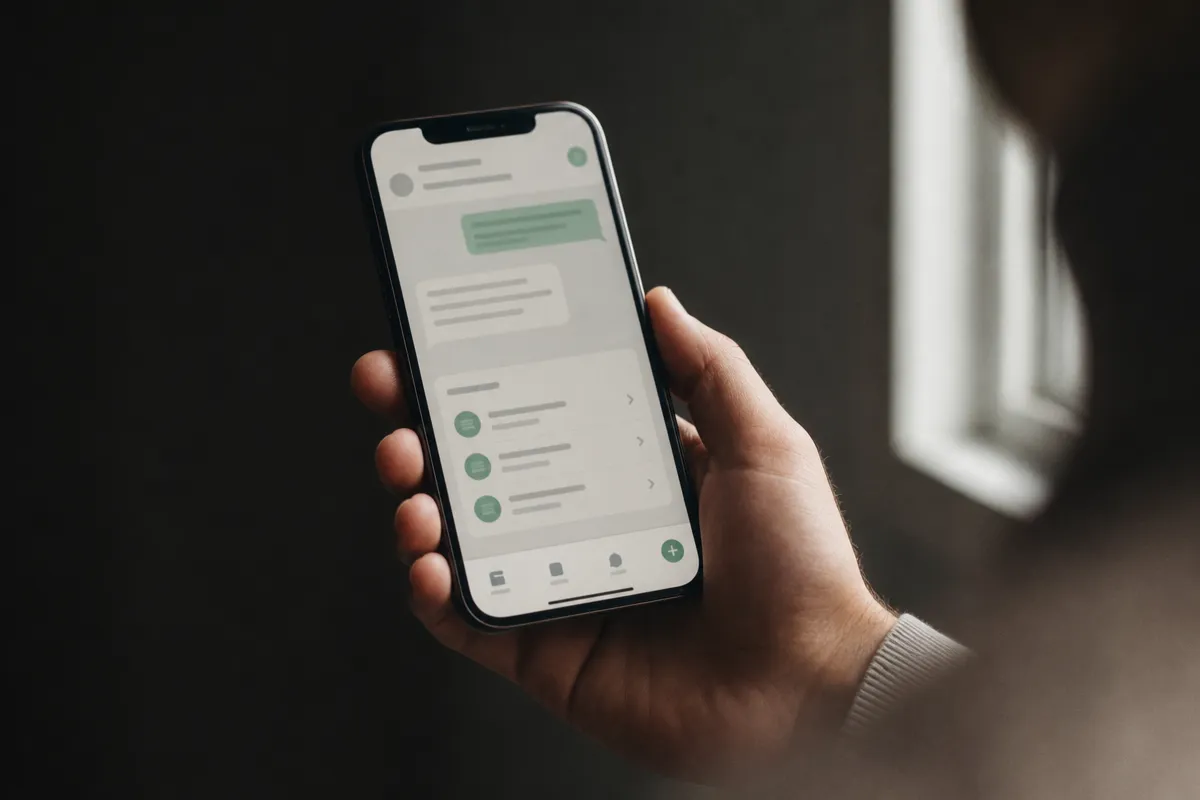
The first thing to automate is the first response to every enquiry, on every channel, so nothing sits waiting.
For a clinic that means missed-call text-back, an AI receptionist that answers when the team cannot, and a single inbox that pulls phone, WhatsApp, Instagram DMs, web forms and Google enquiries into one place. The point is speed. Given how fast a lead goes cold, an instant reply is worth more than a perfect one sent the next morning. Text is the right channel for that first touch too, because messages get read fast, with open rates far higher than email.
I saw this clearly with a clinic in Derbyshire that had just relocated and had almost no local visibility. We rebuilt the profile, added an AI receptionist, missed-call text-back and WhatsApp support, and started automated review collection. Within three months the clinic went from being barely seen to around a 30% increase in visibility, and just as importantly the missed calls and WhatsApp leads stopped going cold. That first-response layer is what an AI receptionist is really for. It supports the team, it does not replace them, and anything clinical is handed straight to a human with the full conversation history.
Establish Local Trust: Can You Automate Reviews and Your Profile?

Yes, and it is one of the highest-return things to automate, because in aesthetics trust starts before the enquiry.
The trust layer you can put on autopilot is review collection and the upkeep of your Google Business Profile. It matters because patients check you before they ever contact you. BrightLocal’s 2024 survey found that most consumers regularly read online reviews for local businesses, and that far more people will use a business that replies to its reviews than one that ignores them. A nervous first-time patient choosing between you and the clinic down the road is reading that page.
The manual version of this always fails on a busy day. The automated version asks every happy patient for a review at the right moment and flags anything negative to you privately first. One clinic I worked with in West London collected over 200 reviews in three months this way, purely from patients they already had. This is the work an automated review system does quietly in the background, alongside keeping your profile categories, photos and posts current so you keep showing up locally.
Leverage Smart Marketing: Why Automate Follow-Up Before Ads?

Because ads only amplify a system that already works, and follow-up is the part of that system most clinics never build.
My repeated advice to owners is to stop spending more on ads until the leaks are fixed. If your capture and follow-up are weak, more ad spend just makes the leak more expensive. The follow-up worth automating is the nurture sequence for enquiries that do not book straight away, plus the reminder and win-back flows that protect the bookings you already have. No-shows are a good example of a leak automation fixes well. In the NHS, more than 15 million missed GP appointments a year carry an average cost of around £30 each. A private clinic loses far more than that per empty treatment-room hour it cannot resell at short notice.
The academic picture backs this up. A systematic review in the British Journal of General Practice looked at who misses appointments and why, and much of it comes down to forgetting and friction, both of which automated confirmations and reminders reduce. A timed sequence of confirmations, reminders and a post-no-show recovery flow, all with an easy reschedule link, is what proper automated follow-up looks like. Get that running before you turn the ad tap up.
Freedom Through Systems: How Do You Automate Yourself Out of the Bottleneck?

You automate yourself out of the bottleneck by moving your repeat tasks into three buckets: automate, delegate with a system, or keep with the owner.
This is the pillar most owners need the most and reach for the least. The admin drain is real. One survey of entrepreneurs found the average owner spends a third of the working week on small administrative tasks. Sage found UK small businesses lose the equivalent of two days every month just chasing invoices and other financial admin. That is time you are not spending on patients or on growing the clinic.
Sort your repeat tasks into the three buckets. First responses, reminders, review requests and follow-up go in the automate bucket. Anything that needs a person but not you goes into a one-page playbook so the team can own it. What is left, the genuine judgement calls, stays with you. The honest truth I keep coming back to is that owners cannot out-work being the bottleneck. They can only out-system it. The goal is not just more bookings. It is being able to step back for two weeks without the clinic falling apart. You should be the architect of the clinic, not its safety net.
What Business Automation Will Not Do
Business automation will not fix a broken process, and it is not set-it-and-forget-it. Tools do not fix process. If the underlying workflow is a mess, automating it just makes the mess happen faster.
So audit the process before you change the technology. Keep the tools that already work, whether that is Pabau, Fresha, Cliniko or something else, and build the workflow around them rather than ripping everything out. Automation also does not replace your receptionist or your clinical judgement. The AI captures, qualifies and routes. A human still has the consultation and makes every clinical decision. Anyone selling you a fully hands-off clinic is overselling, and your patients will feel the difference.
A Simple Order to Start This Week
You do not need to automate everything at once. Working through that order, here is a sensible sequence for an owner-led clinic:
- Map the leaks. List every way an enquiry reaches you and mark the ones with no fast, reliable response.
- Automate the first response. Missed-call text-back and an instant reply on every channel come before anything else.
- Automate local trust. Turn on automated review requests and get your Google Business Profile current.
- Automate follow-up and reminders. Build the nurture, reminder and no-show recovery sequences before you spend more on ads.
Then, and only then, start automating yourself out of the day-to-day. Do it in that order and each layer supports the next instead of papering over a leak underneath it. If you want help finding where your clinic leaks first, that is exactly what a strategy call is for, and you leave with your top three structural leaks whether or not you ever work with us.
Want me to look at yours?
Thirty minutes with the person who would build it. Tell me what you do and where the work comes from now, and I will tell you straight whether a rebuild would change anything. If it would not, I will say so.
Book a callNot ready for a call? Take the slow road. One short email every Tuesday from Surinder: one thing to check on your own website, phone line or reviews. Five minutes, no ads.