Patient Retention Strategies for Medspas and Aesthetic Clinics: The Operator's Playbook (2026)
A treatment-cycle approach to patient retention strategies for medspas and aesthetic clinics. Segment the database, tie messages to Botox, filler and skin courses, and let automation handle the logistics so the team can be present when it matters.

TL;DR
- Most aesthetic clinics already have the patients they need. What they do not have is a system that keeps those patients in a treatment cycle, which is where the revenue really sits.
- The strongest patient retention strategies start with database segmentation, not a louder newsletter. Sort patients by 3, 6, 12 and 18+ months since last visit, then map each segment to a treatment cycle (Botox, filler, skin courses).
- A 5% lift in retention can grow profit by 25% to 95%, but the lift only happens when the message lines up with where the patient is in their treatment cycle.
- Automation is for the logistics: reminders, segment moves, no-show recovery, review requests, soft check-ins. The conversation that actually closes the rebooking still belongs to a human on the team.
- Measure two things weekly: rebook rate at exit and 90-day return rate. If both move, the retention engine is working. If neither moves, the system is not running, no matter how clever the workflow looks on screen.
If your team is busy but your monthly recurring revenue from existing patients is flat, the problem is almost never effort. It is structure. This guide is the operator playbook for fixing it, written for owner-led aesthetic clinics and medspas that already have a database and want to make it earn.
Why Patient Retention Strategies Matter More Than New Leads
Retention beats acquisition on every important number in an aesthetic clinic.
The classic Reichheld and Bain finding is that a 5% lift in customer retention can produce a 25% to 95% increase in profit, depending on the business. For aesthetics specifically, repeat clients tend to spend 67% more than new ones and are 92% more likely to refer a friend. So the same database, treated differently, is worth a different amount of revenue.
There is also a cost story. Most clinics quietly accept that the first few visits from a new patient lose money once you add ads, consultation time and discounted starter offers. The patient only becomes profitable inside a treatment cycle. If they leave after one or two visits, you have effectively paid to teach someone to buy from a competitor.
So when an owner says “I need more leads”, the question I usually ask back is: how many active patients are sitting in your database right now? It is almost always the bigger lever.
What Counts as Retention in an Aesthetic Clinic?
Retention is the percentage of patients who come back inside a defined window, ideally inside their natural treatment cycle.
For an aesthetic clinic this is not one number, it is two:
- Customer Retention Rate (CRR): the share of patients who return within 12 months. Industry sources put a healthy band somewhere around 60% to 70%.
- Rebook Rate at Exit: the share of patients who book their next appointment before they leave the clinic. This is the early-warning metric. If it sits under 50%, the retention engine is leaking before automation can rescue it.
The difference between a clinic doing well and a clinic struggling is rarely in the marketing spend. It is in whether the front desk, the practitioner and the system all behave as if the next visit matters as much as this one.
The Real Problem: You Have a Database, Not a Retention System
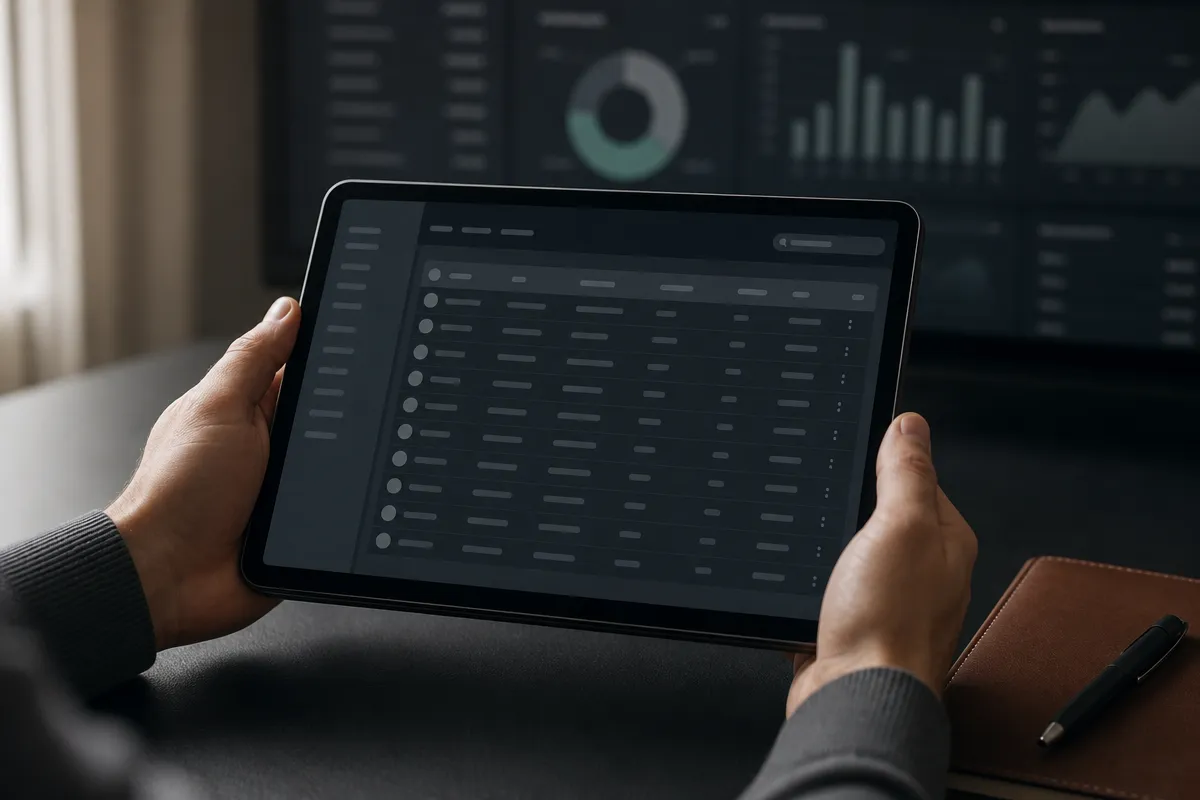
Most clinics I look at have a database the size of a small town. Two thousand, four thousand, sometimes more than ten thousand contacts sitting inside Pabau, Fresha, Cliniko, Vagaro or AestheticsPro. That is the asset.
The problem is that the database is being treated like a mailing list. A weekly Mailchimp newsletter goes to everyone, an offer drops at the end of the month, and the team hopes someone bites. Inside that database are three very different groups: patients who left three months ago and are inside their Botox window, patients who left fourteen months ago who probably need a soft re-introduction, and patients who came once for a hydrafacial and never returned because nobody followed up.
Sending the same message to all three is the marketing equivalent of shouting in a corridor. It is loud, it is technically active, and it converts very little.
This is what I mean when I say clinics do not have a lead problem, they have a leak problem. The leak is between the practitioner saying “see you in three months” and the patient actually walking back in the door.
How Do You Segment an Aesthetic Clinic Database for Retention?
Segment patients by 3, 6, 12 and 18+ months since their last visit, then tag every patient by the treatment cycle that brought them in.
This is the framework we use at Resoclinx, and the structure has held up across every clinic I have audited. It works because it maps onto how aesthetic patients actually behave, rather than how marketing software pretends they behave.
- 3 months is your “warm window”. Botox patients are inside their natural rebook cycle. Skin-course patients are inside an active package.
- 6 months is your “drift window”. Filler patients are coming due. Skin maintenance patients should be rebooking now. A light, well-timed nudge here recovers a lot of natural revenue.
- 12 months is your “lapsed window”. This is reactivation territory. The patient has not chosen a competitor in most cases, they simply forgot. Most clinics ignore this group entirely.
- 18+ months is your “winback window”. Expect lower response rates. Treat it as a clean re-introduction with a clear reason to return (new device, new treatment, refreshed clinic, new practitioner).
The segmentation only works if every patient is also tagged by treatment cycle. A Botox-only patient and a laser-course patient should not get the same 6-month message. The 6-month gap means very different things to each of them.
Tying Segments to Treatment Cycles: Botox, Filler, Skin Courses
The point of treatment-cycle marketing is to time each message to the moment the patient is naturally thinking about their next session.
For Botox, the typical maintenance window is every three to four months for most patients. So a Botox patient who has not returned at the 10-week mark is starting to think about it. A reminder at week 10 lands as helpful. A reminder at week 26 lands as a sales pitch.
For dermal filler, six to twelve months is the more honest cycle, depending on the product and the area treated. A filler-only patient does not need a 3-month nudge for the same area. They need a confidence message at 6 months and a soft check-in at 11.
For a course-based skin treatment such as a six-pack of microneedling or peels, the cycle is internal to the course and then opens up to a quarterly maintenance pattern. So the messaging cadence has to switch from “next session” to “next phase”.
When this is done well, there are very few “promotions” going out at all. Most of the messages look like reminders, check-ins or short clinical notes from the practitioner. They feel like care, not marketing. And the inbox-fatigue that kills broadcast newsletters does not happen.
A peer-reviewed multi-clinic study across 14,916 patients found that putting a structured facial assessment and treatment plan in place was linked to a 2.5x higher chance of six-month retention. The mechanism is the same: when the patient leaves the clinic with a clear next step that ties to their face, not a generic newsletter, they come back.

What Should Each Retention Segment Actually Receive?
Each segment should receive a specific, timed message that matches its window. No segment should receive the same broadcast newsletter as the others.
A simple shape that works in practice:
- 3 months, on cycle: a personal-feeling SMS or WhatsApp from the practitioner mentioning the specific treatment (“Hi Sarah, you are coming up to the three-month mark since your last Botox, want me to hold a Thursday slot?”).
- 6 months, drifting: a short, useful message with a clear booking link and one practical fact (typical filler longevity, or what the next phase of a skin course looks like). One call to action only.
- 12 months, lapsed: a reintroduction message, not a discount. Acknowledge the gap, offer a quick check-in consultation, and let the patient self-book. A small course-correction offer is fine, but do not lead with price.
- 18+ months, winback: more direct. Mention what has changed in the clinic since they last visited, a fresh reason to return, and a clear scheduling option.
The trap to avoid is the “20% off” reflex. Discounting your highest-trust group trains them to wait for the next discount, and erodes the lifetime value model.
How Does Automation Fit Into Patient Retention Strategies?
Automation handles the logistics. The team handles the moments that need a human.
This is the line I repeat with every clinic owner: automation should not replace the relationship, it should automate the logistics so the team can be more present when it matters. The receptionist cannot remember 4,000 patient timelines. Software can. But the actual rebooking conversation, the warm “tell me how it healed”, the small clinical adjustments, all of that belongs to a person.
In practice that means the system does the following on its own:
- Moves patients between 3, 6, 12 and 18+ segments as the dates tick over.
- Sends the right message to the right segment at the right cadence.
- Captures replies into a unified inbox so the team sees one thread per patient, not five.
- Triggers a 48-hour reminder, a 24-hour confirmation, and a 2 to 3-hour final reminder.
- Recovers no-shows with a same-day reschedule message and a waitlist offer.
The team then steps in for the conversation that matters: closing the booking, handling a sensitive question, or picking up a clinical concern. That is the right division of labour. We build it inside automated follow-up, but the principle holds whichever platform you use.
Channel Choice: SMS, WhatsApp, Email or Phone?
Use SMS and WhatsApp for time-sensitive messages, email for longer educational content, and phone for the moments that close a booking or repair a relationship.
A few numbers worth knowing:
- SMS sits at roughly a 98% open rate, usually read within three minutes.
- Email open rates in beauty and wellness sit closer to a 30% campaign average, with click rates a couple of percent at best.
- The original lead-response study published in Harvard Business Review showed that contacting a fresh enquiry inside five minutes makes a contact 100 times more likely and a qualified conversation 21 times more likely than waiting 30 minutes. The same speed principle applies to retention: a reminder at the 3-month mark, not the 5-month mark, is the version that actually books.
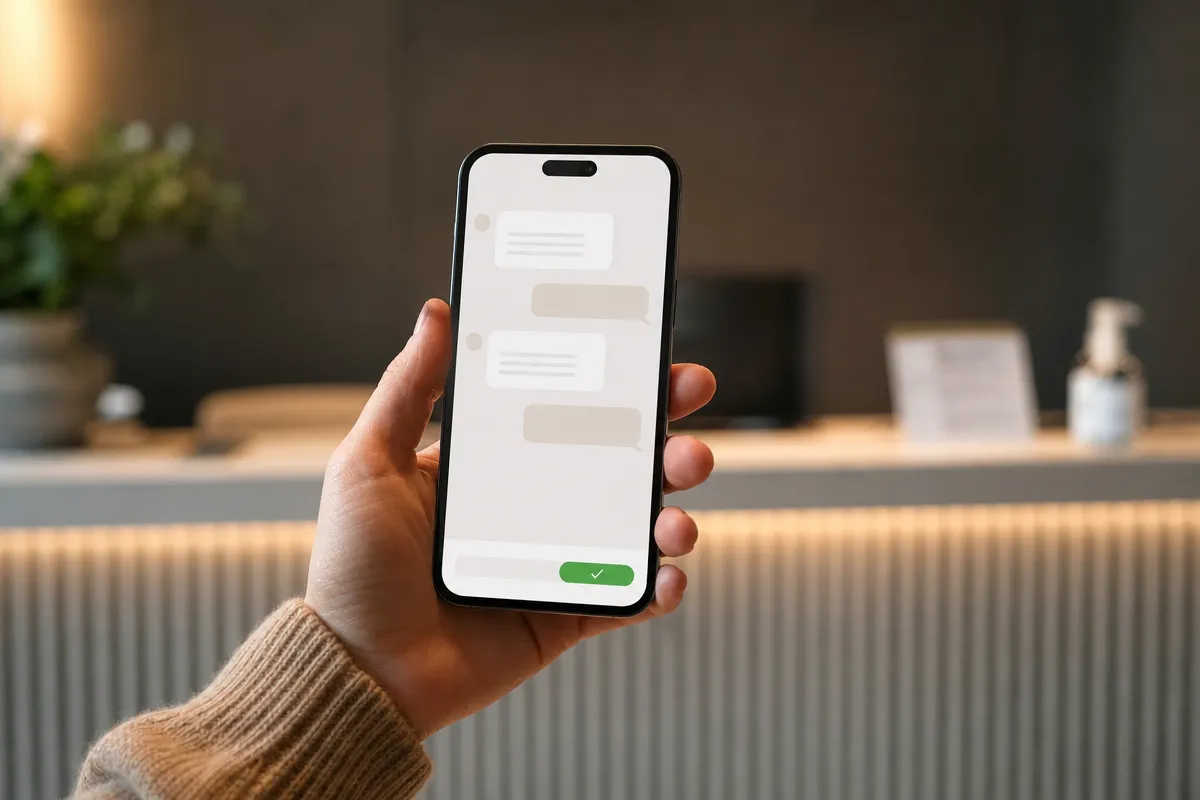
WhatsApp deserves a separate note for UK clinics. Patients increasingly want to message rather than call, especially for sensitive treatments. WhatsApp also makes it easy to handle a photo-led question (“does this look right?”) before it turns into a no-show or a complaint. We connect WhatsApp into the same inbox so the team is not jumping between apps to keep the conversation going.
Reducing No-Shows Inside the Retention Engine
Reduce no-shows by tightening the booking confirmation, the reminder cadence and the recovery flow. The aim is to push no-shows from the typical 15 to 20% range down to 8 to 12% inside 60 to 90 days.
A workable structure:
- At booking: confirmation message (SMS or WhatsApp), with cancellation policy stated clearly.
- 48 hours before: “looking forward to seeing you” reminder with prep notes for the treatment.
- 24 hours before: confirmation request that asks for a one-tap reply.
- 2 to 3 hours before: final reminder with the address and any last instructions.
- After a no-show: an immediate, non-judgemental message with a one-tap rebook link.
Deposits help in high-demand slots, but they are a tool, not a strategy. The strategy is the cadence and the recovery message. UK clinics that introduced a structured reminder and deposit flow have seen meaningful reductions in no-shows without driving patients away. The trick is tone. A reminder that sounds like the practitioner, not like a hospital text system, gets a much higher response rate.
Winback Campaigns: Bringing Back Lapsed Patients
A winback campaign targets the 12 and 18+ month segments with a clear reason to return and a short, low-friction route to book.
The job of a winback is not to be clever. It is to be timely, personal and easy. A few rules that hold up across clinics:
- Send from a person, not the clinic. The message should look like it came from the practitioner or front desk by name.
- Acknowledge the gap. A line such as “it has been a while” lands much better than pretending the patient was here last week.
- Offer a clean reason to come back. A new device, a new practitioner, a refreshed treatment menu, a free check-in consultation. Pick one.
- Make booking one tap. A direct link to the booking page, not a “reply if you are interested” loop.
- Cap the campaign. Three messages over four weeks is plenty. Do not chase. If the patient does not return on the third, archive them politely and try again the following quarter.
Reactivation rates vary, but a well-run winback usually recovers a meaningful share of dormant patients with no ad spend attached. That is high-margin revenue that lives or dies on whether anyone bothered to send the right message at the right time.
How Do You Measure Patient Retention Properly?
Track three numbers weekly and one monthly: rebook rate at exit, 90-day return rate, no-show rate, and 12-month patient lifetime value.
- Rebook rate at exit: the percentage of patients who book their next session before they leave the clinic. Aim for 60% and above. This is the leading indicator.
- 90-day return rate: the percentage of patients who return inside their natural cycle window. For a Botox-led clinic this is the closest thing to a daily heartbeat.
- No-show rate: the percentage of confirmed appointments that did not turn up. Watch the trend, not the absolute number.
- 12-month patient lifetime value: average revenue per patient across the 12 months following their first visit. According to IAPAM, the average single-location medspa generates around $2 million annually with patients spending close to $536 per visit, so even small changes in this number compound quickly.
If you only have time for one, watch rebook rate at exit. Everything else downstream follows from it.
A 30 Day Retention Sprint You Can Start on Monday
If you read this on a Sunday and want to start something concrete on Monday, here is the 30-day shape.
Week 1: see the database.
- Export everything from your booking software.
- Tag every patient by last visit date and primary treatment.
- Build the four segments: 3, 6, 12, 18+ months.
- Run a basic count and a basic revenue-per-segment estimate.
Week 2: write four messages.
- One short SMS or WhatsApp for each segment.
- Send each from a named person.
- Include one call to action per message and a direct booking link.
- Get the practitioner to read them aloud before they go out. If it sounds like a generic SaaS email, rewrite.
Week 3: send and listen.
- Send each segment a single message, staggered across the week.
- Capture every reply into a single inbox.
- Reply within working hours, by name, like a person.
Week 4: tighten and lock in.
- Pick the message that booked the most appointments and turn it into the default.
- Set the system to move patients between segments automatically going forward.
- Decide who on the team owns retention, weekly, with a named slot in their calendar.
This is the sprint that produces the “where has this revenue been hiding” moment. You can do it with whatever tools you already have. Resoclinx automates it from week one, but the structure is what matters, not the platform.

GDPR and Marketing Consent for UK Clinics
UK clinics must have an active, recorded marketing consent for every patient on any retention list, and consent for clinical photos is separate from consent for marketing.
This is not a minor compliance footnote. Hamilton Fraser sets out the working position for UK aesthetics: marketing consent must be unbundled from treatment consent, must be specific to the channel (SMS, email, WhatsApp), and must be recorded with an audit trail. Pre-ticked boxes do not count. A vague “we may contact you” line buried in a treatment consent form does not count either.
In practice this means:
- The booking form has a clear, separate marketing opt-in for SMS, email and WhatsApp.
- Every retention message includes a one-tap opt-out that actually works.
- Lapsed patients on lists older than two years should be re-permissioned before any winback.
On the regulated side, the JCCP and CPSA Code of Practice requires that all marketing is honest, does not trivialise risk, and does not exploit vulnerability. So retention messages should not say things they cannot back up. A reminder that the patient is approaching their Botox window is fine. A claim that the treatment is risk free is not.
This is the kind of structural detail that is easier to get right at the start than to retrofit. If you are unsure, build the segmentation framework first, and pause any marketing message to a segment until consent is verified.
Common Mistakes That Kill Aesthetic Clinic Patient Retention
There are five patterns that kill retention in clinics that otherwise have the right ingredients.
- One mailing list, no segmentation. Everyone gets the same newsletter, so nobody opens it after the third send.
- Discount as a reflex. Every retention message ends with a percentage off, which trains the database to wait for the next one.
- Practitioner says “see you in three months”, nobody books. The rebook at exit is the cheapest retention tactic and the most often skipped.
- No-show recovery is left to memory. A no-show that gets a same-day reschedule message recovers far more often than one that gets called three days later.
- The team does not own retention. If retention is not on someone’s weekly job description, it is on nobody’s. The system runs, but the human follow-through dies.
Most of these have nothing to do with software. They are operating-standard problems. The software makes the standard easier to keep, but it does not invent the standard.
This is one of the ideas at the centre of how we work at Resoclinx. Retention is the part of the clinic that should run with or without the owner in the room. If it cannot, you are still buying yourself a job.
The Owner’s View: Automate the Logistics, Not the Relationship
I built and sold nine clinics before this one, and the lesson that has stayed with me longest is this: the owner cannot out-work a poor retention system. They can only out-system it.
Patient retention strategies sound like a marketing topic, but in practice they are an operating-system topic. The right segmentation, the right cadence, the right channel, the right person sending the message. None of it is complicated. All of it is uncomfortable, because it requires that the clinic agree on standards and then keep them.
Most owners I work with already know this. They have a database. They have great practitioners. They have happy patients somewhere in the back catalogue who would book again if anyone asked them properly. The blocker is not strategy. The blocker is that the day-to-day swallows everything.
The fix is the same one I keep coming back to. Automate the logistics. Keep the relationship human. Let the team be more present when it matters. The strongest patient retention strategies are the ones the clinic actually runs every week, not the ones written in a deck nobody opens. The same applies to wider medspa operations: the engine only works if it runs on the quiet weeks as well as the busy ones.
Want me to look at yours?
Thirty minutes with the person who would build it. Tell me what you do and where the work comes from now, and I will tell you straight whether a rebuild would change anything. If it would not, I will say so.
Book a callNot ready for a call? Take the slow road. One short email every Tuesday from Surinder: one thing to check on your own website, phone line or reviews. Five minutes, no ads.