The pattern is so consistent it is almost a calendar. Month one is exciting. Month two looks promising. By month three or four the money has run out, because she was funding the ad spend and the agency fee at the same time, every month, out of a business that was already tight.
I have written about why that happens at length. This page is about what we do instead.
The order matters more than the budget
We do not start here. We are almost never the first thing a clinic buys from us and it is deliberate.
Advertising works by putting more people into the top of your system. If the system leaks, you are paying to fill a bucket with a hole in it, and you will conclude that ads do not work when what actually happened is that they worked and you lost the results.
So: front desk first, so nothing that arrives is wasted. Website second, so people arrive without being paid for. Ads third, to turn the volume up on something that is already converting.
That is not a sales ladder. It is the order that stops you wasting money.
What we run
- Google, Meta and Instagram, managed inside the same system that catches the enquiries.
- Social posting and content on the same schedule, so the ads are not the only thing representing you.
- Treatment landing pages that match what the ad promised, rather than dropping everybody on the homepage.
Why it is in one system
This is the actual argument, and it is not about tidiness.
When your ads live with one company, your website with another and your bookings in a third, nobody can tell you which pound worked. Everybody can tell you their own half of the story and every half looks good.
I paid £2,000 a month to a Google Ads agency for our London clinic and let them report success in a currency that meant nothing. Their conversions were form fills. We rang those people a few hours later and half of them had already moved on.
The ads were probably fine. The gap between the click and the phone call is where the money went, and nobody was measuring that, because nobody owned both ends of it. It is one of the two things I would undo if I could go back.
So: a form fill is not a conversion. A conversion is somebody sitting in your chair.
Because the ad, the follow-up and the booking are in the same place, we can follow a click all the way to an appointment. That changes what we can turn off. Most of what you spend on advertising is wasted, in every business, always. The only question is whether you can see which half.
The honest problem with advertising
The day you stop paying, it stops.
That is true of every agency and everybody who tells you otherwise is selling. It is the single reason clinics end up back where they started with less money than they had.
What we do about it is the list.
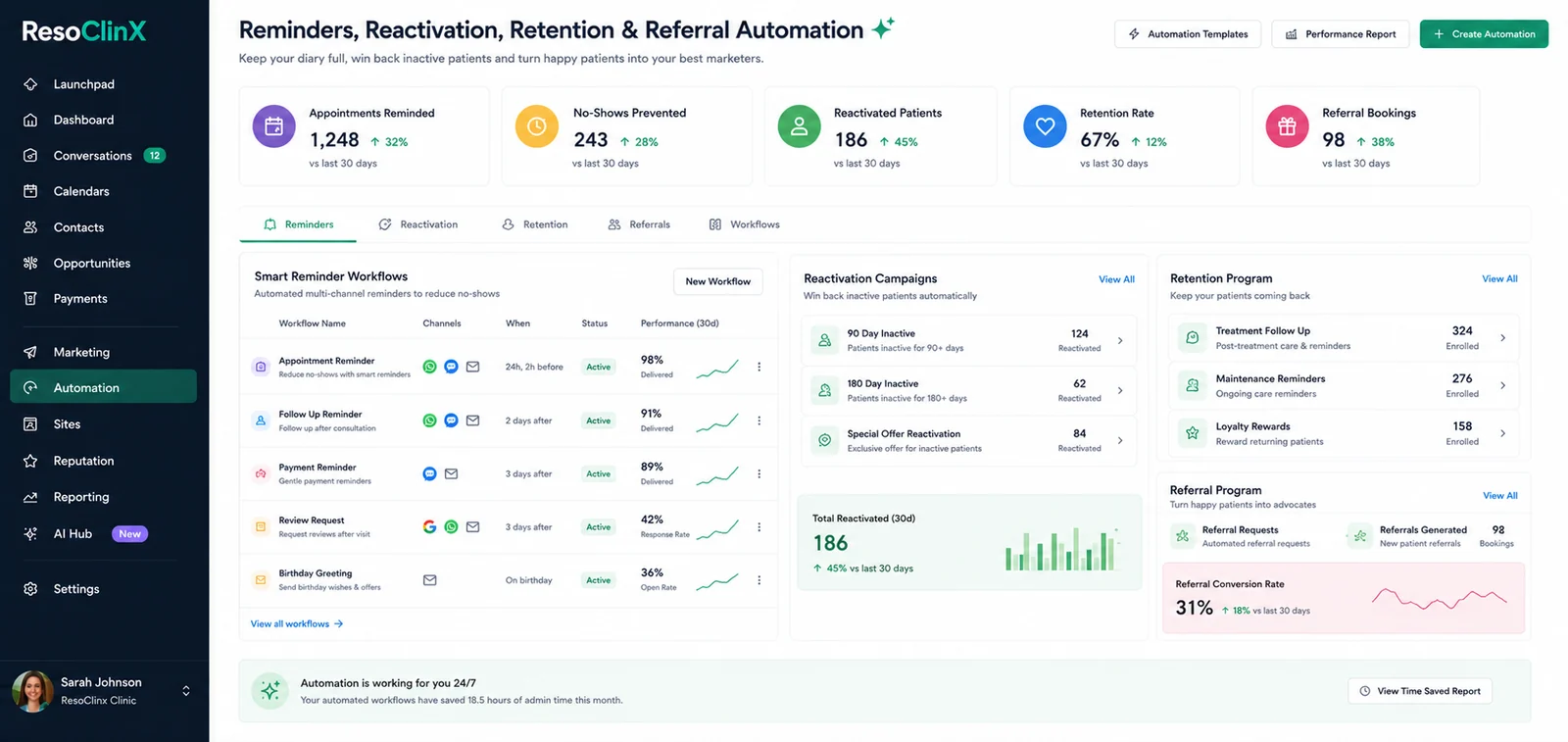
Every person the advertising brings in is captured and kept, whether or not she books this time. Most people do not buy the first time they hear about you. If you have her details, you can talk to her for years, for nothing, and a clinic with a list can put money in the diary in a week without spending anything on advertising at all.
That is how I grew a nine-clinic group. Not on ad spend. On a list, and something to say to it.
So the advertising is not the asset. What it leaves behind is.
What this does not do
It will not fix a quiet clinic on its own. If nothing is converting, advertising makes the problem more expensive, not smaller.
It is not a lead-generation contract. We do not sell you a number of leads a month. Any number like that is either guessed or achieved by counting things that are not leads.
It does not replace you knowing your numbers. You will see what is spent and what came back. You should look at it.
Who this is not for
- Anybody who has not got stages one and two working. Ask me later and I will tell you the same thing.
- Anybody who wants to be left alone for six months and shown a report at the end.
- Anybody whose budget only stretches to the advertising itself. If the spend is the last money in the business, this is the wrong month to start.