
I have watched this happen more times than any other pattern in this industry, including in my own clinics before I understood it.
The sum nobody does at the start
You sign with an agency. Say the fee is £500 a month and they want £1,000 a month of ad spend behind it. Those are round numbers, but the shape is what matters.
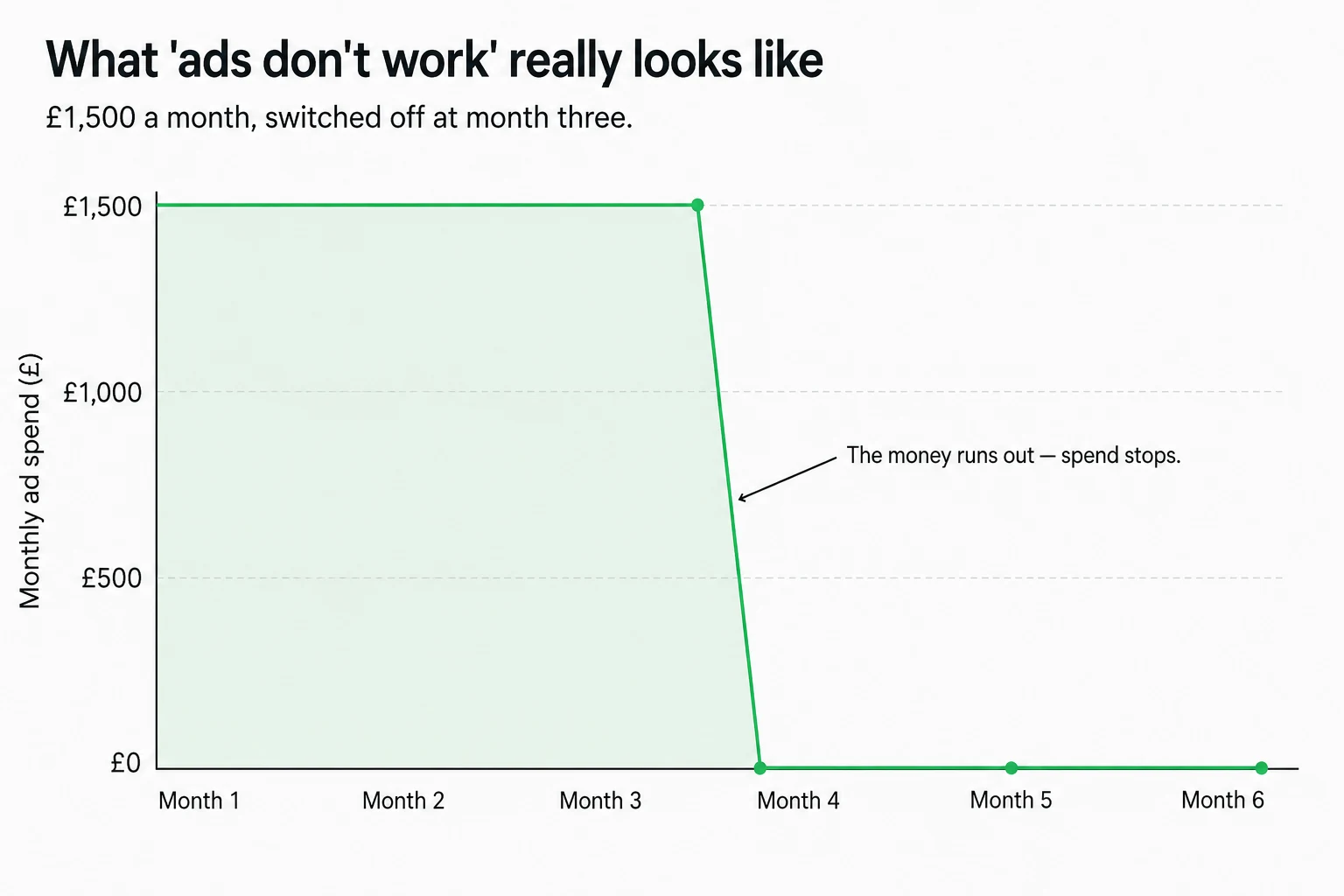
Month one. You pay £1,500. Some enquiries come in. A few book. It feels promising.
Month two. You pay another £1,500. More enquiries. The agency shows you a report full of clicks and conversions and it looks respectable.
Month three. You need another £1,500. But the money that was going to pay for month three has already gone, because wages went out, the rent went out, and the VAT bill arrived. And the bookings from months one and two have not turned into cash yet, because half of them are consultations, and consultations pay later or not at all.
So you stop.
Month four. The enquiries stop the day the spending stops, because that is how paid advertising works. And now you have spent £3,000 and you have nothing running.
Month five. You tell another clinic owner that you tried Google Ads and it did not work.
What actually happened
Nothing about the advertising was tested. It was switched off before anyone could tell.
Paid advertising takes time to settle. The first month is largely the platform learning who your patients are. It is normal for month three to be better than month one, which means almost every clinic quits immediately before the point where it starts to pay.
And there is a second, worse problem hiding inside it.
The reports were measuring the wrong thing
At our London clinic we spent £2,000 a month with a Google Ads agency. Every month they showed us clicks, cost per click, and conversions, and the conversions looked fine.
Except their "conversion" was somebody filling in a form.
When we rang those people a few hours later, half were not interested any more and the rest never picked up. So we blamed the agency for sending rubbish leads, and the agency blamed us for being too slow to call. We were both partly right, and both missing it. There was nothing in between the form and the phone call.
We were paying £2,000 a month to fill a bucket with a hole in it, and then arguing about whose fault the water was.
What to do instead of stopping
- Do not start until the follow-up exists. Advertising into a front desk that loses enquiries is the most expensive mistake available to you.
- Budget for six months or do not start. Three months of spend that gets switched off is worse than never spending it, because you also lose the lesson.
- Ask what a conversion means. If it means a form fill, it means very little. Ask for booked consultations, and then for consultations that attended.
- Build something that does not stop when the spending stops. Your website, your Google profile, your patient list, your newsletter. Those keep working in the month you cannot afford anything.
That last one is the whole argument. Paid advertising is rented. Everything else is owned.
The honest version
I am not against advertising. I ran it, and it worked when it was set up properly and left alone long enough.
But it should be the thing you add once the front desk holds water and something is coming in for free. In the wrong order it is just a fast way to turn £3,000 into a story about how marketing does not work in this industry.