Why Aesthetic Clinics Miss So Many Calls (And How to Fix It)
Most aesthetic clinics do not have a lead problem. They have a leak problem. This is why missed calls keep happening and the practical fix that works.
TL;DR
- Most aesthetic clinics miss between a quarter and two thirds of inbound calls, and around 85% of callers never try again.
- Missed calls are an infrastructure problem, not a lazy team. The clinic is in treatment, on lunch, or closed when patients ring.
- The fix is to take the front-of-house team off the first-response layer, with always-on answering and instant text-back.
- Speed matters more than polish. Replying inside five minutes is the single biggest lever for converting an enquiry.
- Once routing rules are in place, the team only handles warm, qualified, ready-to-book conversations.
Why Do Aesthetic Clinics Miss So Many Calls?
Aesthetic clinics miss calls because the team that should answer the phone is also the team running the treatment, greeting the next patient and cleaning the room. It is a structural problem, not a lazy team.
In my experience working with clinics, owners are often defensive about this. They assume their team is on the phones all day. Then we run a one-week call audit and the numbers come back ugly. The reception phone rings 40 to 80 times a week and somewhere between a third and two thirds of those rings go unanswered, depending on size, treatment mix and opening hours.
It is rarely about effort. It is about layout. The receptionist is finishing a callback when a walk-in arrives. The injector is mid-consent when a new enquiry rings. Two patients arrive together, both wanting tea. Nobody is sitting there waiting for the phone.
How Many Calls Does an Average Clinic Actually Miss?
Most clinics miss far more calls than they think. A 2024 study covering 85 small businesses across 58 industries found that only 37.8% of inbound calls were answered by a live person. The rest went to voicemail or hit nothing at all.
Healthcare and service industries sit even higher. Industry data shows around 62% of small business calls go unanswered. The painful part is what comes next. Around 85% of callers who do not get through never try again. They tap the next clinic in the search results and book there instead.
For aesthetic clinics specifically, this is brutal because the UK aesthetics industry is now worth more than £3.6 billion and growing, which means competitors are one Google search away.
The Real Cost: What a Single Missed Call Is Worth in an Aesthetic Clinic
The cost of one missed call in aesthetics is rarely the call itself. It is the lifetime of a patient you never met.
Take an average filler patient at £350 per session, returning twice a year for two years. That is roughly £1,400 in direct revenue, before skin treatments, top-ups or referrals. A clinic that quietly drops two of those a week is leaking £140,000 a year out of the back door, while the owner is paying for ads at the front door.
This is what I mean when I say most clinics do not have a lead problem. They have a leak problem. More ads only make the leak more expensive.
Why Won’t Patients Just Leave a Voicemail?
Patients do not leave voicemails because they no longer expect a callback to arrive in time. Around 80% of callers who hit voicemail hang up without leaving a message. The voicemail box is essentially decorative.
The behaviour shift is bigger than aesthetics. The 2026 consumer texting report shows that 83% of consumers prefer text over phone calls for brand communication. They expect a message, not a missed call notification with no follow-up.
So the modern playbook is simple. If you cannot pick up, send a text within 30 seconds. The patient stays warm, you stay in the conversation, and they do not move on to the next clinic in the list.
The Three Times of Day Aesthetic Clinics Miss Calls
Most missed calls in a clinic cluster into three predictable windows. Once you see the pattern, you can design around it.
- In-treatment hours. Roughly 10am to 4pm, the busiest treatment period. Reception is taking deposits, walking patients to rooms, sterilising tools and managing late arrivals. Phone is the lowest priority.
- Lunch and changeover. A 30 to 45 minute window where reception is offline, tea is being made and the team is regrouping. Calls in this window often go nowhere.
- After hours and weekends. Around 40% of inbound calls to service businesses arrive outside standard hours. For a clinic that closes at 6pm, every evening enquiry is gone unless something catches it.
A clinic that does not have a system for these three windows will keep missing calls no matter how many people sit at reception.
What Is the 5-Minute Response Rule?
The 5-minute rule is the single biggest finding in lead conversion research. Replying to a new enquiry within five minutes makes you up to 100 times more likely to make contact than waiting 30 minutes, and 21 times more likely to convert the lead.
In healthcare specifically, the average response time to a new enquiry sits at over two hours. That gap is the entire opportunity. A clinic that consistently responds inside five minutes is operating in a different market to its neighbours, even if the marketing spend is identical.
The reason is not magic. It is intent. A patient who has just searched for “lip filler near me” is at peak interest in that moment. An hour later, they have moved on, scrolled past 20 other clinics, or talked themselves out of it. Five minutes is the window before doubt sets in.
What Actually Fixes the Missed-Call Problem?
The fix is to take the team off the first-response layer entirely. Instead of expecting reception to answer in real time, every call, form, DM and WhatsApp is captured and replied to instantly, by a system, with a human-style message. The team only steps in once the conversation is warm and ready to close.
That stack has four moving parts:
- Always-on answering. A 24/7 AI receptionist that picks up when nobody can, asks the right qualifying questions and books a callback slot.
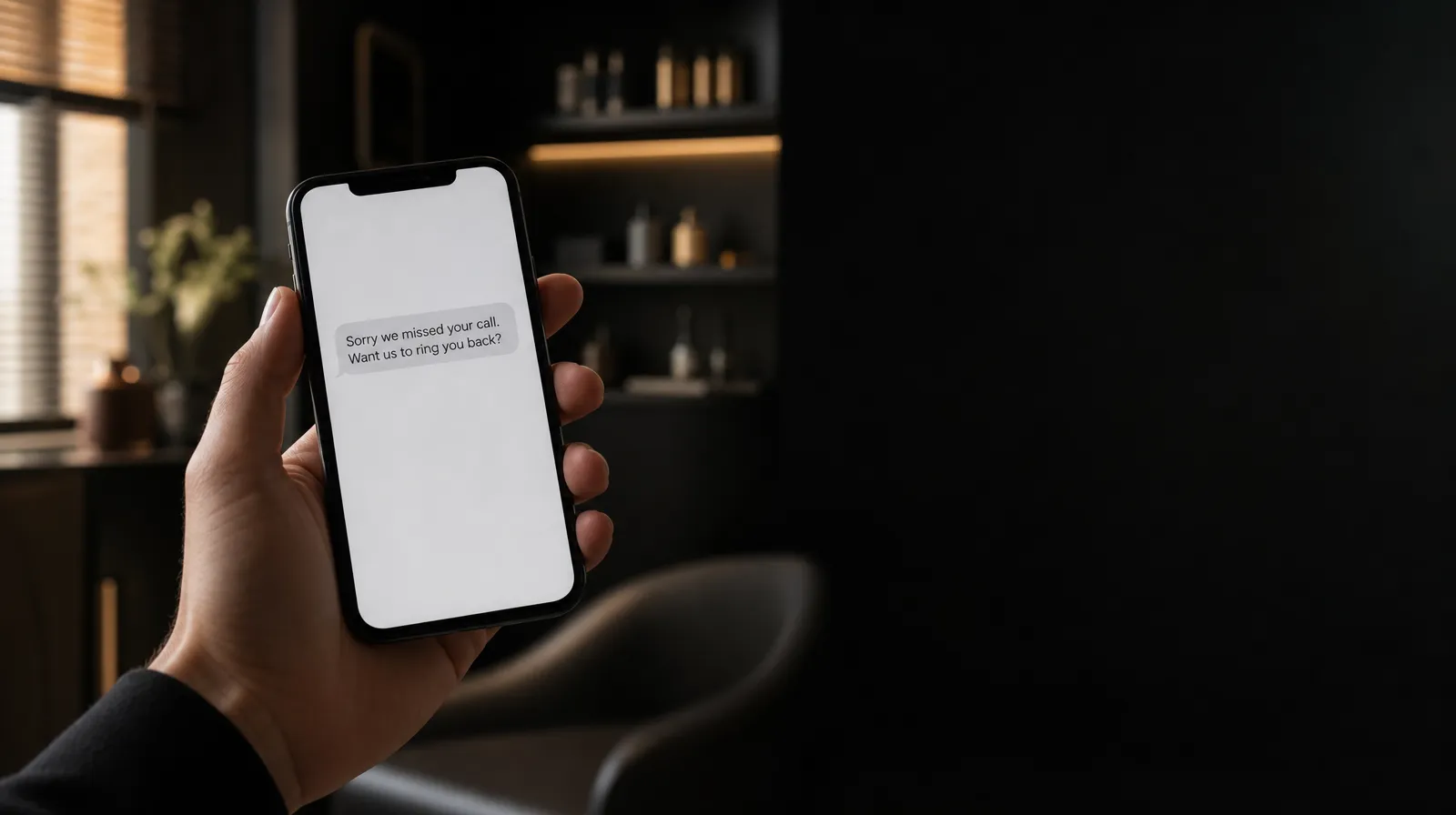
- Instant text-back on missed calls. If the call rings out, the patient gets a friendly text within 30 seconds. SMS has a 98% open rate and most messages are read inside three minutes.
- WhatsApp and DM coverage. Most enquiries no longer arrive on the phone at all. A WhatsApp chatbot holds the conversation, gathers basic information and supports photo upload where relevant.
- Routing rules. Anything sensitive, clinical or complex routes to a human with the full conversation history. Anything simple is handled or scheduled automatically.
This is what we mean by securing every enquiry. Until that layer is built, the rest of the marketing budget is sitting on a leaky bucket.
What This Looks Like in Practice
Two real examples make the point.
A clinic in Reading was not getting enough leads and was struggling to be found locally. We fixed and optimised the Google Business Profile, improved local SEO and put structured review collection in place. Within six months the clinic became visibly busier locally with around a 30% uplift in enquiries. Most of that gain came from no longer dropping the calls and DMs that were already landing.
A clinic in Derbyshire moved to a new location and lost almost all of its local visibility overnight. We rebuilt the local presence, refreshed the Google Business Profile, added new clinic images and added an AI receptionist, missed-call text-back and WhatsApp support on top. Within three months, local visibility was up around 30% and the team stopped losing weekend and after-hours enquiries. Same patients, same town, same treatments, completely different capture rate.
In both cases, the team did not work harder. The system worked harder.
What About WhatsApp and Instagram DMs?
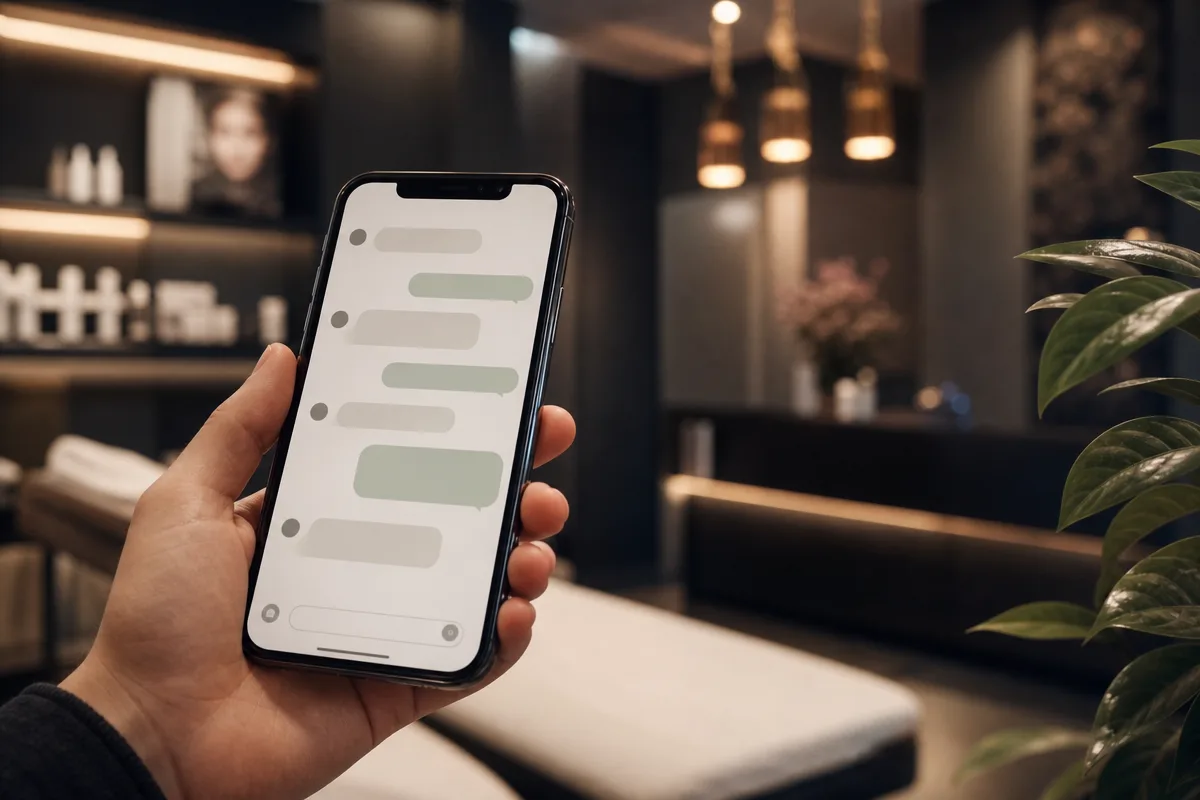
WhatsApp and DMs have the same leak problem as the phone, just with a softer landing. Patients send a message, nobody sees it for hours, and they move on.
DMs are now the front door for a lot of aesthetic enquiries. Patients want to ask a question quietly, send a photo of the area they are unhappy with and find out roughly what it might cost. If that conversation sits unread until tomorrow morning, they have already messaged two other clinics.
The same first-response logic applies. The AI replies instantly, holds the basics of the conversation, captures the photo where relevant and routes the patient towards a callback. The team gets a clean inbox of warm conversations, not a wall of unread messages.
Will an AI Receptionist Sound Robotic to Patients?
It should not, if it is built properly. The script is written in the clinic’s tone, every line is approved before go-live, and the rule is simple: if it does not sound like something a good receptionist at the clinic would actually say, it does not go out.
Patients also have less patience for hold music than for a clear, friendly text. Most patients are unwilling to wait longer than two minutes on hold before becoming frustrated. A warm automated message that arrives within 30 seconds is usually a better patient experience than a manual reply the next morning.
The AI also stays in its lane. It does not give clinical advice, it does not handle sensitive matters and it does not close bookings directly inside the clinic software. Anything that needs human judgement gets handed over with the full conversation history, which is what good practice looks like under the JCCP code for cosmetic practitioners.
How Do You Start?
Start by measuring, not buying. Run a one-week audit on the phone, the WhatsApp inbox, the DMs and the website forms. Count the rings, count the unread messages, count the after-hours enquiries that nobody saw until Monday. The number is almost always uncomfortable.
Then build the four layers in order: always-on answering, instant text-back, DM and WhatsApp coverage, clear routing rules. Train the team on what to do with the warm conversations that land in their inbox, and review the system every month.
If you want help with this rather than a checklist, missed-call text-back is part of what Resoclinx builds and runs, at one flat monthly rate with no minimum term and the price on the page. The call is thirty minutes and you get told where your enquiries are leaking whether or not you buy anything.
The reason most clinics do not fix this is not cost. It is that nobody has shown them the leak yet. Once you see it, you cannot unsee it.
Want me to look at yours?
Thirty minutes with the person who would build it. Tell me what you do and where the work comes from now, and I will tell you straight whether a rebuild would change anything. If it would not, I will say so.
Book a callNot ready for a call? Take the slow road. One short email every Tuesday from Surinder: one thing to check on your own website, phone line or reviews. Five minutes, no ads.