Starting an Aesthetics Business in the UK: What It Actually Costs
The costs that sink a new aesthetics business are rarely the ones on the business plan. Here is what nine UK clinics taught me about the numbers that arrive later.
TL;DR
- The visible costs (premises, fit-out, machines, training) are the easy ones to budget, and they are usually the smaller half of the picture.
- Warranty and servicing on a single laser can run £6,000 to £10,000 a year, and the handpiece that does the actual work is often excluded.
- Most non-surgical clinics in England do not need CQC registration, but laser and IPL usually need a council licence and an appointed Laser Protection Adviser.
- Insurance is a running cost tied to what you treat and how you trained, not a one-off launch cost.
- Budget marketing as a monthly line from month one. The clinics that stall are the ones that spent everything on the room.
Most people costing out an aesthetics business build the plan around the things they can point at. The room, the chair, the machine, the sign above the door. Those numbers are easy to get, easy to compare and easy to feel good about on a Sunday night.
I built and franchised nine clinics in the UK and sold the group in 2023. The costs that actually hurt were almost never on the first spreadsheet. They arrived in month four, in month nine, and in the week the warranty renewal landed.
This is the version of the numbers I wish somebody had given me.
What Does It Actually Cost to Start an Aesthetics Business in the UK?
There is no honest single figure, and anyone quoting you one is selling something. What there is instead is a shape: the costs that arrive before you open, and the costs that arrive every month after you open.
The second column is the one that decides whether you are still trading in year three. Industry data puts the UK market at over £3.6 billion, which is exactly why so many people open, and it does not stop the ONS finding that fewer than four in ten new UK businesses reach a five-year survival mark.
| Costed on the plan | Arrives later |
|---|---|
| Rent and deposit | Business rates once relief stops applying |
| Fit-out quote | Electrics, drainage and the bits the quote excluded |
| Machine purchase or finance | Warranty, servicing, consumables and handpieces |
| Training courses | Insurance, renewals and cover for new treatments |
| Branding and website build | Marketing every single month |
| Company registration | Licences, renewals and adviser fees |
The Costs Every Aesthetics Business Plan Gets Right

Nobody forgets the rent. Nobody forgets the machine. These are the numbers that get compared, negotiated and worried about, which is precisely why they are rarely the problem.
Setting up as a private limited company is the cheapest thing you will do all year, and it got slightly less cheap on 1 February 2026 when the digital incorporation fee moved to £100 in the latest round of Companies House fees. Postal filing costs £124 and takes over a week.
Business rates catch people out because they read the rateable value as if it were rent. In England, full business rates relief applies below a rateable value of £12,000 and tapers out at £15,000, and the 2026 revaluation pushed some premises over those lines. Check the rateable value of a unit before you fall in love with it, not after.
Why Is the Fit-Out Always More Expensive Than the Quote?
Because the quote covers what you can see, and a clinic runs on what you cannot.
On one of my sites the electrics came in at roughly £6,000 more than budgeted, because the plug sockets ended up in the wrong places for how the room was actually used and the whole lot had to be redone once the equipment arrived. That was not the contractor being dishonest. It was me not walking the treatment properly before signing off the drawings.
The floor tiles were the same lesson in a cheaper suit. I saved money on tiles that looked fine in a showroom and did not survive a clinic environment, so they were replaced inside two years. Porcelain first time would have been cheaper than porcelain second time.
Three things I would insist on now, in this order:
- Walk the treatment physically in the empty room, with a colleague acting as the patient, before the electrician starts.
- Put the contract in writing with a schedule and a retention, however friendly the builder is.
- Spend on the surfaces that get cleaned twenty times a day and save on the ones that get looked at.
What Does an Aesthetic Machine Cost to Own, Not to Buy?
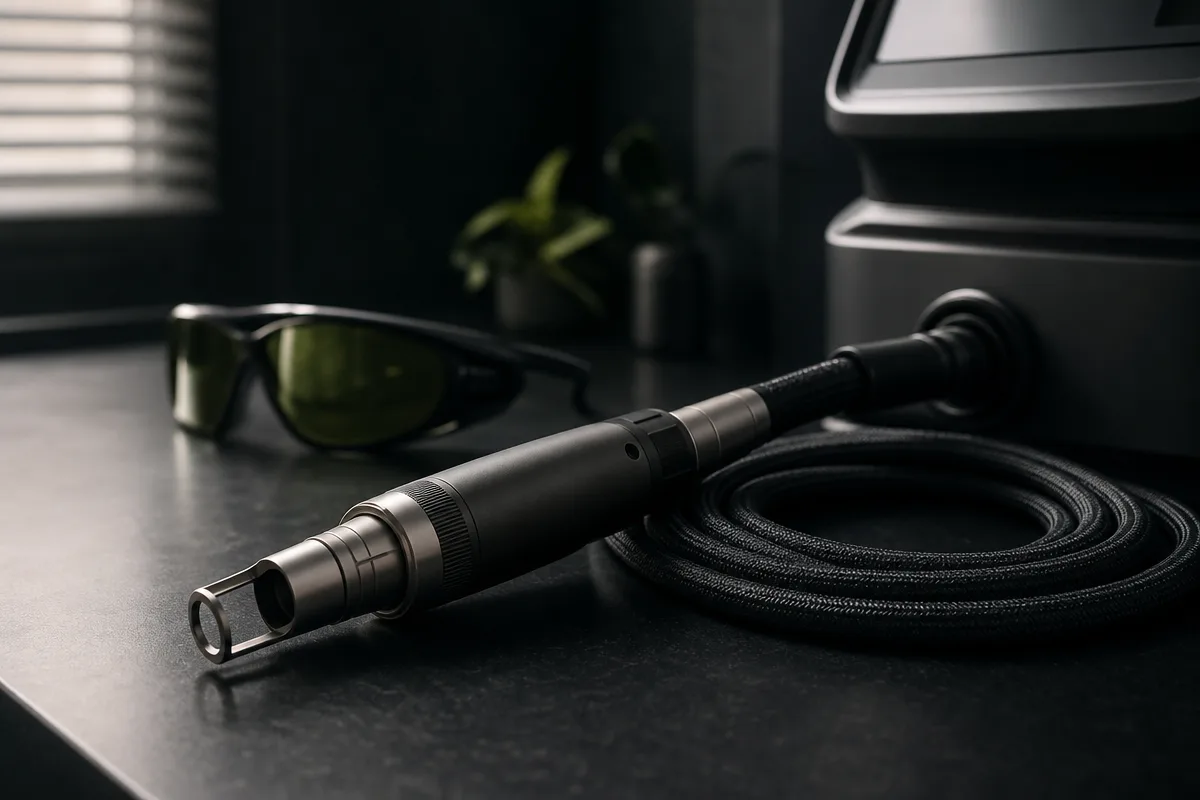
The purchase price is the smallest number in the deal. Ownership is the number that repeats.
Warranty and servicing on a single laser realistically ran me £6,000 to £10,000 a year per machine. That is not a scandal, it is the business model: manufacturers earn on the aftercare, not on the sale. What surprised me was what the contract quietly excluded. The fibre optic handpiece, the part doing the actual work and the part a tired staff member is most likely to snap, was not covered. So the machine was under warranty and the thing that made it useful was not.
I ended up training as a laser engineer so I could service my own machines. That turned a job the contract priced in thousands into around an hour a year per location. Most owners will not do that, and do not need to, but you should at least go into the finance agreement knowing three things:
- What the annual warranty and service bill will be in year two, in writing.
- Which parts and consumables are excluded, by name.
- What the finance repayment is as a percentage of the turnover you have today, not the turnover in the projection.
Asset finance is agreed against a business plan. The repayment is collected against reality. Buying kit for demand you have not proved yet is the single most common way an aesthetics business runs out of room to manoeuvre.
Which Licences and Registrations Do You Actually Need?

Fewer than most owners assume nationally, and more than most expect locally.
The Care Quality Commission regulates surgical procedures and treatment of disease, disorder or injury. On that basis it does not regulate botox for cosmetic purposes, dermal fillers, chemical peels or laser hair removal. Plenty of new owners budget for a registration they never needed, and a few skip one they did.
Local authorities are where the real paperwork lives. If you run Class 3B or Class 4 lasers or IPL, many councils require a special treatment licence for the premises, with fees that vary widely by borough and are renewed annually. Most will also want proof you have appointed a Laser Protection Adviser and written local rules in place before they approve you.
Then there is what is coming. England’s licensing scheme for non-surgical cosmetic procedures is still being developed rather than in force, with a risk-based red, amber and green model proposed and further detail expected. Nobody can price it accurately yet. What you can do is avoid building a business that only works if the rules never tighten.
One more that is free to get right and expensive to get wrong: botulinum toxin is a prescription-only medicine, and UK advertising rules on prescription-only medicines mean you cannot promote it to the public, including in organic social posts and hashtags. Build your treatment menu and your website around what treatments do, not around product names.
What Insurance Does an Aesthetics Business Need?
The cover that matters is treatment-specific liability, and it is a running cost rather than a launch cost.
Specialist brokers in this market commonly work to £2 million as a floor, with £5 million as the working standard for practitioners offering toxins, fillers and laser. Cover is also tied to your training and to the exact treatments listed on the policy, which is why the aesthetic insurance market keeps shifting as treatments change.
The practical mistake I saw repeatedly across the group was adding a treatment to the price list on a Monday and telling the insurer about it never. Do not do that. We do not sell insurance and I am not going to tell you which policy to buy, but I would say this: use a broker who works in aesthetics specifically, and re-read the policy every time your menu changes.
The Cost That Arrives in Month Four

This is the one that closes clinics, and it never appears as a line item.
The pattern is boringly consistent. Deposit, fit-out, equipment finance and training absorb the cash. The doors open. The first few weeks come from friends, family and curiosity. Then month four arrives, the diary has gaps, and there is nothing left to spend on getting people through the door. So the owner discounts, which trains the local market to wait for discounts.
The good news is that the first fix is not a budget, it is a process. Most new clinics are already getting enquiries they never convert: a missed call at lunchtime, an Instagram message at 9pm, a form filled in on a Saturday. That is where enquiries die, and it costs nothing to plug compared to buying more traffic.
Practically, before you spend a pound on ads:
- Answer every missed call with an automatic text within seconds, so the caller does not ring the clinic down the road.
- Get every channel (phone, forms, WhatsApp, DMs, Google messages) into one place someone actually watches.
- Follow up more than once. Most enquiries are lost to silence, not to price.
That capture layer is what the front desk work is for, and it is deliberately the first thing we fix for a clinic rather than the last. Your website matters too, but as a working part of the business rather than a brochure, which is why an agent-ready website belongs in the running-cost column and not the launch column.
What Should an Aesthetics Business Plan Include?
A 24-month cash view, not a 12-month one, and a running-cost list that is honest about renewals.
If you are writing an aesthetic clinic business plan this month, make sure these lines exist and have real numbers against them:
| Running cost | Frequency | Notes |
|---|---|---|
| Rent, service charge, utilities | Monthly | Ask for the previous year’s actual utility bills |
| Business rates | Monthly | Check the rateable value against relief thresholds |
| Equipment finance | Monthly | As a percentage of realistic month-six turnover |
| Warranty and servicing | Annual | Per machine, and confirm exclusions in writing |
| Consumables and handpieces | Variable | The parts warranty will not cover |
| Insurance | Annual | Re-quoted every time the treatment menu changes |
| Licences and adviser fees | Annual | Council licence, Laser Protection Adviser, renewals |
| Marketing and capture | Monthly | Set before the rent, not after |
| Staff and cover | Monthly | Including holiday and sickness cover |
If the plan only works when every month is a good month, it is not a plan, it is a hope.
What I Would Do Differently
I would buy the second machine later and fix demand first. Every time.
Across nine clinics the pattern held: the sites that struggled had the best equipment and the quietest phones. We were good at buying capacity and slow to build the thing that filled it. Machines are visible, they feel like progress, and a salesperson will happily arrange the finance in an afternoon. Nobody sells you a follow-up process with the same energy.
I would also write everything down sooner. Contracts with builders, exclusions in warranty agreements, what the insurer has actually agreed to cover. Every expensive surprise I had came from a conversation that felt fine at the time and was never put on paper.
And I would treat the online side as part of the clinic rather than an afterthought. Too many owners invest heavily in premises and equipment, then treat the website, the Google profile and review building as something to sort out later. The result is a professional clinic that is nearly invisible to the people looking for it.
Frequently Asked Questions
How much does it cost to start an aesthetics business in the UK?
There is no single figure, because the range between a single treatment room and a three-room clinic with laser is enormous. The more useful way to plan is to split the money into two columns: what it costs to open, and what it costs to run every month once you have opened. The second column is the one that decides whether you are still trading in year three.
Do I need CQC registration for an aesthetic clinic?
Most non-surgical clinics in England do not. The Care Quality Commission regulates procedures that involve a cut to the body or equipment inserted into it, and it says it does not regulate botox, dermal fillers, chemical peels or laser hair removal on that basis. If you offer surgical procedures, or you treat disease rather than appearance, that changes and you should check the scope of registration directly.
Do I need a licence to run laser or IPL treatments?
Usually yes, and it comes from your local council rather than a national regulator. Many authorities require a special treatment licence for the premises, proof that you have appointed a Laser Protection Adviser, and written local rules before they will approve it. Fees and rules vary by council, so ask yours before you sign a lease on a building.
How much insurance cover does an aesthetic practitioner need?
Specialist brokers in this market commonly point to £2 million as a floor and £5 million as the working standard for practitioners doing toxins, fillers and laser. Cover is also treatment-specific and training-specific, so adding a new treatment to your menu without telling your insurer is one of the more expensive mistakes available. Speak to a broker who works in aesthetics rather than buying general business cover online.
Can I advertise anti-wrinkle injections on my clinic Instagram?
Not by product name. Botulinum toxin is a prescription-only medicine and UK advertising rules stop you promoting it to the public, which covers organic posts and hashtags as well as paid ads. You can describe what a treatment does and what it is for, so most clinics use wording such as anti-wrinkle treatment instead.
How much should I budget for marketing in the first year?
Treat it as a monthly running cost from the day you open, not as leftover money once the fit-out is paid for. Set the figure before you commit to the rent and the equipment finance, because those two payments will otherwise absorb it. The cheapest work is answering enquiries you already get, so fix that before you spend anything on ads.
Where to Start If You Are Opening This Year
Take the plan you have and add the second column. Warranty, servicing, consumables, insurance renewals, licence renewals and a marketing figure that exists every month rather than when there is spare cash. If the numbers still work, you are in far better shape than most people opening this year.
Then fix capture before you spend on demand. Our front desk rules are ten free fixes for the enquiries a clinic is already losing, and they cost nothing to put in place. Start there, and every pound you spend on marketing later will go further.
Want me to look at yours?
Thirty minutes with the person who would build it. Tell me what you do and where the work comes from now, and I will tell you straight whether a rebuild would change anything. If it would not, I will say so.
Book a callNot ready for a call? Take the slow road. One short email every Tuesday from Surinder: one thing to check on your own website, phone line or reviews. Five minutes, no ads.