
Aesthetic Equipment: What a Machine Really Costs to Own
The purchase price is the smallest number in the deal. What a laser really costs a UK clinic once warranty, servicing, handpieces, safety cover and finance interest are all counted.
TL;DR
- The purchase price of aesthetic equipment is the smallest number in the deal. Warranty, servicing, consumables and finance interest all sit behind it.
- On my machines, warranty and servicing ran roughly six to ten thousand pounds a year, per laser, before a single consumable.
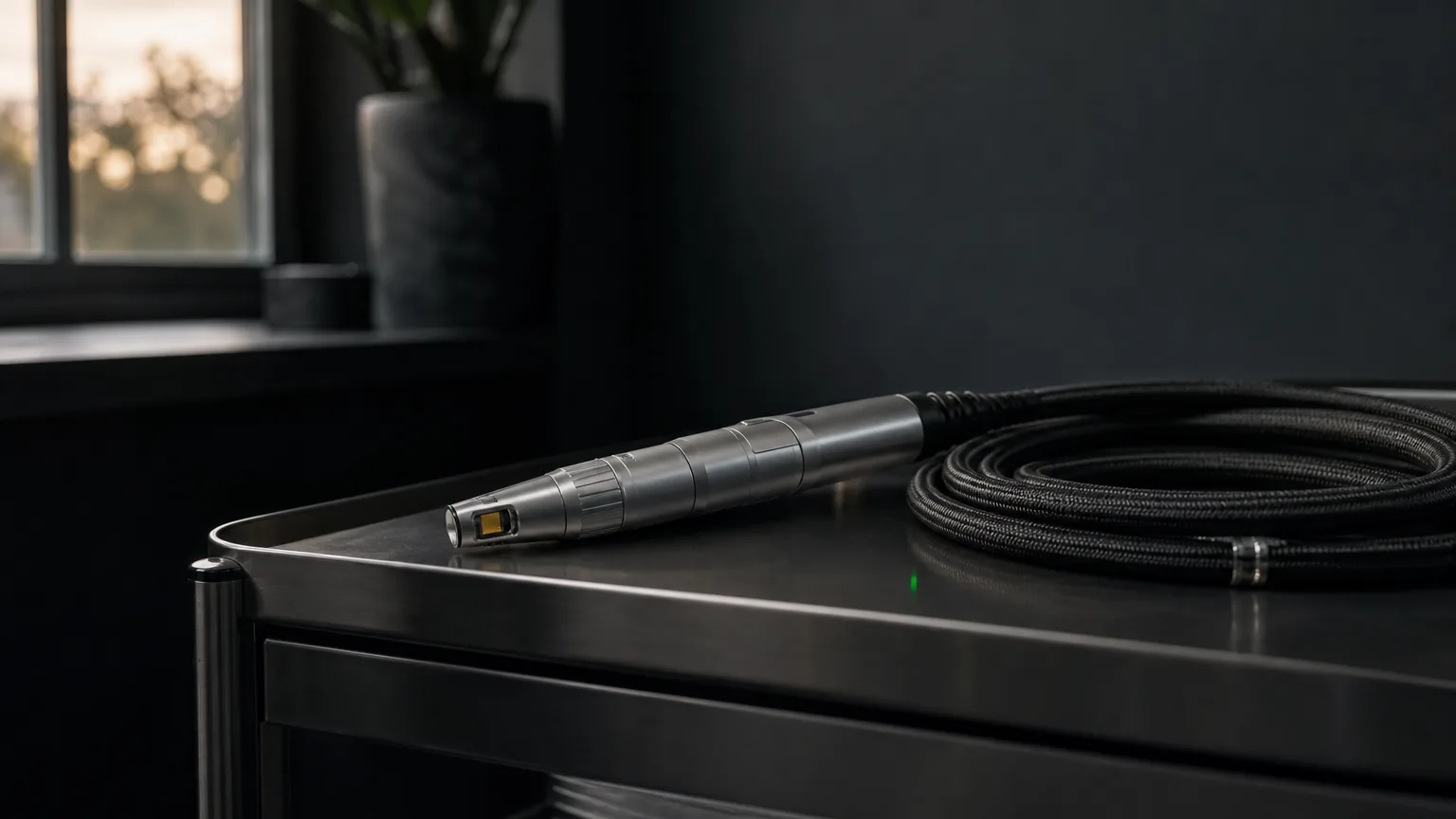
- The fibre optic handpiece does the actual work, snaps far more easily than anyone expects, and is usually excluded from the warranty.
- Servicing is where manufacturers earn steadily. The sale is the entry ticket.
- Finance is normally agreed against turnover the clinic does not have yet. Sort out demand first, then buy the kit.
Most people buying aesthetic equipment are shown one number, and it is the wrong one. The quote tells you what the machine costs. It does not tell you what the machine costs to own, and those two figures are a long way apart. I built and franchised nine clinics before selling the group in 2023, and a lot of the money I lost early on went into that gap.
I eventually trained as a laser engineer so I could service my own machines. That was not ambition. It was a straight reaction to what the service contracts were quoting me, and it turned a job priced in thousands into about an hour a year per location.
Why Aesthetic Equipment Costs More Than the Number on the Quote
Because the quote covers the box, and the box is the cheapest part of running it.
Once the machine is in the room, you carry a set of costs that never appeared in the sales conversation:
- The annual service or warranty renewal, which is a different price from year one.
- Consumables and handpieces, which fail on their own schedule rather than yours.
- Electrical safety testing and calibration, plus the paperwork that proves it happened.
- A laser protection adviser and the local rules for your installation.
- Insurance that reflects the device you have actually bought.
- Staff training, then retraining every time somebody leaves.
- Interest on the finance, which is real money over a four or five year term.
- The room the machine occupies, whether or not it is being used.
None of that is hidden. It is just not on the quote, and the quote is what the owner remembers.
What Does a Laser Actually Cost to Run for a Year?
On my own clinic floor, warranty and servicing alone ran somewhere between six and ten thousand pounds a year, per laser, before a single consumable.
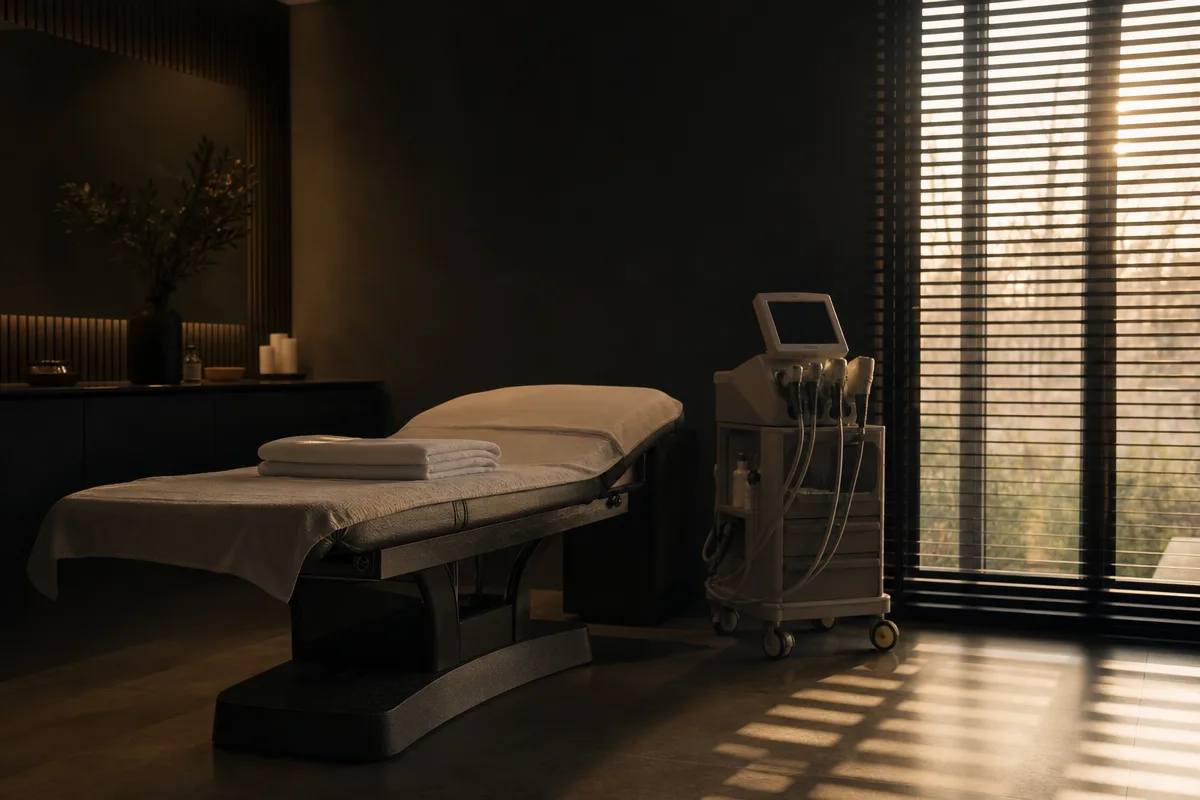
That is my experience, not a published industry average, and it moved a lot depending on the platform, its age and how hard we ran it. Run three machines across two sites and you are into a five-figure annual bill that nobody wrote into the business plan.
The servicing is not optional either. The MHRA’s Managing Medical Devices guidance sets the expectation that devices are maintained in line with the manufacturer’s instructions on a monitored, recorded schedule, and the wider medical device rules sit behind that. In practice your insurer and your local council will both want to see an in-date service certificate, so the contract you thought was a nice-to-have turns out to be the thing that keeps you trading.
Ask one question before you sign anything: what does the renewal cost in year two, year three and year four? Get it in writing. Year one is often bundled and cheap. The renewal is where the real number lives.
The Handpiece Is the Part That Breaks
Here is the part I genuinely did not see coming.
The handpiece is not an accessory. On a lot of platforms it carries the fibre optic that delivers the energy, which means it is the component doing the actual treatment. It is also the component that gets held, moved, put down in a hurry, wheeled over, and occasionally dropped by a tired therapist at the end of a long Saturday.
Fibre optic does not bend forever. It kinks, it fractures internally, and the failure is usually invisible from the outside. The machine powers up fine and the results quietly get worse, or it throws an error mid-treatment with a patient on the couch.
Then you find out what your warranty actually says. Nine times out of ten a broken handpiece is classed as accidental damage or a consumable, not a manufacturing fault, so it sits outside cover. You are buying a replacement at full price, and you are buying it at short notice because the room is booked.
I lost a lot of money to that before I started treating handpieces as a budget line rather than an emergency. If you take one practical thing from this article, make it that: put handpiece replacement in the annual forecast, and train the team on how the cable is coiled and stored, because that is where most of the damage happens.
Why Do Manufacturers Care So Much About Servicing?
Because the sale happens once and the servicing happens every year.

This is not a scandal and I am not going to pretend it is. It is simply the business model, and it is the same one used by printer manufacturers and coffee machine companies. The margin sits in the recurring side: annual contracts, parts, calibration, proprietary software, approved engineers. The device itself is the entry ticket.
Understanding that changes how you negotiate. Once you know the servicing is the annuity, you stop haggling over the sticker price and start haggling over the thing that actually costs you money for the next five years. Push on the multi-year service price. Push on parts discounts. Ask whether an independent engineer can touch the machine without voiding cover, and what the manufacturer will and will not release to them.
That last question matters more than most owners realise. A machine that only one company can legally service is a machine whose running cost that company sets.
What Safety and Legal Costs Come With Aesthetic Equipment?
More than most owners budget for, and almost none of it appears on the finance agreement.
Start with health and safety law. The Control of Artificial Optical Radiation at Work Regulations came into force in 2010 and require employers to protect workers’ eyes and skin from hazardous artificial light sources. The HSE sets out the law plainly, has specific pages on lasers, and publishes employer guidance on what a proper risk assessment looks like.
Then there is supervision. The British Medical Laser Association’s standards expect laser safety to be overseen by a certificated adviser with demonstrable knowledge of cosmetic laser and IPL systems, and expect local rules to be produced for each installation, held on site and reviewed annually. That adviser is an annual cost, not a one-off.
Registration is the bit that confuses people most. The CQC is clear that it does not regulate laser and IPL treatments such as hair removal or skin rejuvenation when they are purely cosmetic, and its guidance on the scope of registration explains where the line falls. That does not mean nobody is watching. Local authorities have their own rules, and the government’s consultation response, published on 7 August 2025, confirmed the intention to build a two-part system: local authority licensing for lower risk procedures and CQC regulation for the highest risk ones. That is rolling out rather than settled, so treat it as a cost that is coming rather than a cost you can ignore.
How Should You Finance a Machine?
Carefully, and against demand you already have rather than demand a sales rep has forecast for you.

Asset finance itself is completely normal. UK asset finance new business reached a record £41.1 billion on the Finance and Leasing Association’s figures, and lending to smaller businesses has been growing month after month, with SME lending up again in early 2026. Spreading the cost of a productive asset over its working life is sensible, and I have done it plenty of times.
Two things are worth being honest about.
The first is the cost of the money. With Bank Rate held at 3.75% in July 2026, interest on a four or five year agreement is a genuine number, and it is often quoted to you as a flat rate that looks smaller than the effective rate really is. Ask for the total amount repayable, not the monthly figure. The monthly figure is designed to feel affordable.
The second is the personal guarantee. Newer clinics and thinner balance sheets usually get asked for one, which means the director is on the hook if the business cannot pay. That is a very different risk from a company debt, and it deserves a proper conversation with your accountant rather than a signature at the end of a demo day.
The trap I fell into, and the one I see constantly, is agreeing the repayment against a turnover projection built by the person selling the machine. The forecast assumes a utilisation rate the clinic has never hit and a marketing plan that does not exist yet. The finance is real from day one. The turnover is a hope.
What Happens When the Machine Sits Idle
The bill does not care.
A finance payment, a service contract and a laser protection adviser cost the same in a quiet month as a busy one. The only variable is how many treatments you spread them across. Run a machine four times a week and the cost per treatment is embarrassing. Run it twenty times a week and the same machine looks like the best decision you ever made. Same kit, same bill, completely different business.
That is why utilisation is the number I would watch rather than the purchase price. And utilisation is usually not an equipment problem at all. It is an enquiry problem: calls not answered during treatments, WhatsApp messages read at 9pm and forgotten, consultations that never get followed up. I have written before about exactly where enquiries die, and none of those leaks get fixed by better hardware.
Demand First, Kit Second

I bought machines before I fixed demand, more than once. It felt like progress because there was something physical in the room at the end of it. Fixing the phones and the follow-up felt like admin.
The order matters more than the equipment does, and I have set out the full argument for what to do in what order in the wrong order on its own page. The short version: a machine bought into an existing waiting list pays for itself. A machine bought to create a waiting list has to be paid for out of optimism, and optimism does not clear a direct debit.
If enquiries are already arriving and getting lost, that is the cheaper problem. Answering every call, replying to every message inside a couple of minutes and following up properly costs a fraction of a laser and lifts the utilisation of every machine you already own. That is the job our front desk layer does, and it is deliberately the first stage rather than the last.
What Should You Ask Before You Sign?
Ask about the years after the first one, because that is where the money goes.
Take this list to the next demo:
- What does the service contract cost at renewal in years two, three, four and five?
- Is the handpiece covered? Get the exclusion wording, not a verbal reassurance.
- What is a replacement handpiece, in pounds, today?
- Can an independent engineer service this machine without voiding anything?
- What consumables does it need, how often, and at what price?
- What is the total amount repayable on the finance, not the monthly payment?
- Is a personal guarantee required?
- What is the realistic resale value in three years, and who buys these second hand?
- How many treatments a week do I need to break even, using my current enquiry volume rather than a projection?
If the answer to question nine makes you uncomfortable, that is useful information. It is far cheaper to feel uncomfortable in a demo than in month fourteen of a sixty month agreement.
Frequently Asked Questions
How much does it cost to run an aesthetic laser for a year?
On my own clinic floor, warranty and servicing on a single laser ran somewhere between six and ten thousand pounds a year, per machine, before consumables. That figure is my experience across nine clinics rather than a published industry average, and it moves a lot depending on the platform, its age and how hard you run it. Ask for the renewal price in writing before you buy, not after.
Does the warranty cover the handpiece?
Usually not, or not in the way owners assume. The fibre optic delivery inside a handpiece is fragile, and when it fails it is nearly always classed as accidental damage or a consumable rather than a manufacturing fault. That is the single most expensive surprise I saw, because it is also the part staff break most often.
Do I need CQC registration to run a laser or IPL machine?
For purely cosmetic laser and IPL work the CQC says it does not regulate those treatments, so most aesthetic clinics do not register for that reason alone. That is not the same as being unregulated. Health and safety law, optical radiation duties and local authority rules still apply, and the government has confirmed it intends to bring in local authority licensing for lower risk procedures alongside CQC regulation of the highest risk ones.
Should I buy aesthetic equipment outright or use asset finance?
Asset finance is normal and it is not the problem. The problem is agreeing a monthly repayment against turnover you have forecast rather than turnover you already have. If the machine has to create the demand that pays for it, the deal only works if the marketing works, and that is a second bet stacked on the first one.
What is a laser protection adviser and do I have to have one?
A laser protection adviser is a certificated specialist who writes and reviews the local rules for your installation and advises on safe operation. The British Medical Laser Association standards expect an adviser with demonstrable knowledge of cosmetic laser and IPL safety, and expect local rules to be held on site and reviewed every year. Budget for it as an annual cost, not a one-off.
What should I do first, buy the machine or fix the marketing?
Fix demand first. A machine bought into an existing waiting list pays for itself quickly. A machine bought to create a waiting list has to be paid for out of hope. If enquiries are already coming in and being lost to missed calls and slow replies, that is cheaper to fix than a finance agreement is to escape.
Where I Would Start
If you are within a few weeks of signing for a machine, spend one afternoon on your enquiry numbers first. How many calls came in last month, how many were answered, how many were followed up more than once, how many turned into a booked consultation. If those numbers are soft, the machine will not fix them and the finance will make them urgent.
We put the practical version of that into a free guide: ten fixes for the front desk, in the front desk rules. No machine required.
Want me to look at yours?
Thirty minutes with the person who would build it. Tell me what you do and where the work comes from now, and I will tell you straight whether a rebuild would change anything. If it would not, I will say so.
Book a callNot ready for a call? Take the slow road. One short email every Tuesday from Surinder: one thing to check on your own website, phone line or reviews. Five minutes, no ads.