
Industries · Aesthetics and skin
The claims that sell it are the claims you cannot make
IV wellness is bought on how it will make somebody feel. Almost every version of that sentence is a health claim, and health claims are exactly what the advertising rules restrict.
The problem
The marketing that converts is the marketing that gets complained about
Everybody in this niche knows the language that sells: energy, immunity, recovery, glow. Almost all of it is a health claim, and health claims about this category are the ones that get challenged.
So the clinics grow into a habit of writing copy they half know is not defensible, and the more successful they get the more likely somebody looks at it. That is an uncomfortable position to build a business on.
There is a straightforward alternative, which is to sell the experience and the service honestly and let the clinical description stay conservative. It converts less aggressively per visitor and it does not put the business at risk, and in a category this scrutinised that trade is worth making.
What actually works
What moves the needle for iv drip and wellness.
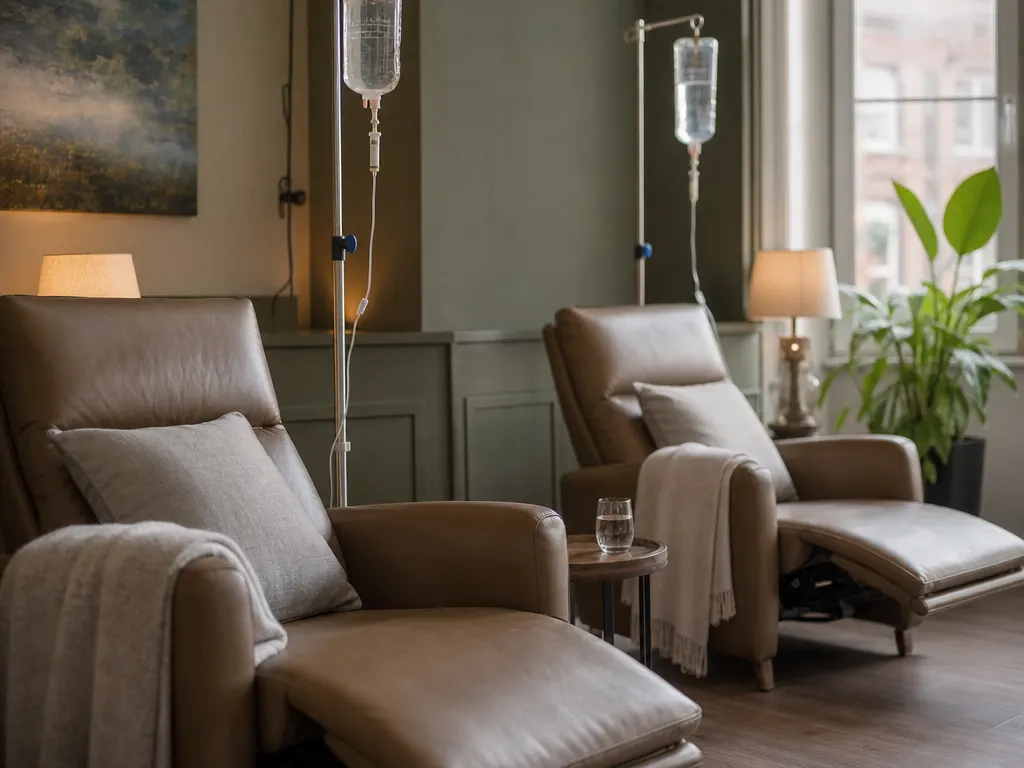
Sell the experience, describe the clinical part plainly
What happens, how long it takes, who administers it, what is in it. Conservative on effect, generous on detail. That is both safer and, with a sceptical reader, more persuasive.
Build the repeat, not the one-off
Single sessions do not make a business here. Packages and memberships do, and they need follow-up rather than a booking button.
Show the clinical governance
Who prescribes, who administers, what the screening is. In a category with a reputation problem this is a genuine differentiator.
The rules you work inside
What is true of iv drip and wellness and nothing else.
This is the part a generic agency does not know, and it is the part that decides whether the marketing is legal, let alone effective.
Who regulates you
Prescribing and clinical governance make this genuinely grey ground, with CQC involvement depending on what is administered and by whom. Confirm your own position rather than assuming.
What you cannot advertise
Health and benefit claims are heavily restricted, and this niche attracts attention precisely because the marketing tends to overclaim.
The software you already run
Pabau, Fresha.
What an appointment is worth
£100 to £250 a session, with real subscription potential if retention is handled.
When you are busy
January, festival season, and a pre-event run.
The one lever
Converting to a subscription, because single sessions are a poor business and repeat is where this becomes viable.
Regulatory positions change, and two of these families are changing now. I confirm the current position before writing your pages rather than copying what a competitor has up.
What you get
The same seven things, pointed at your problem.
The package does not change by niche. What changes is what it is set up to do: which follow-up runs, on what interval, and what the website is built to be found for.
£297 a month. No build fee, no minimum term, live in 14 days.
- Your website
- Missed call text back
- Review funnel
- Lead follow-up
- All-in-one inbox
- Business phone
- AI receptionist
Questions
What iv drip and wellness ask me.
Can we say a drip boosts immunity or energy?
Those are health claims and they are the ones most likely to be challenged in this category. I will write copy that describes the service accurately rather than claims an effect, and I will tell you where I think a line you want to use sits.
Is this niche regulated?
It depends what is administered and by whom, and the position is not as settled as most operators assume. Worth confirming your own rather than following what a competitor does.
How do we make it a real business rather than one-offs?
Packages and memberships, and the follow-up to keep people in them. A single-session model in this niche is a treadmill.
Are before-and-after style claims possible?
Very little of this produces a visible before-and-after, which is part of why the copy reaches for feeling instead. Describe the service and the governance and let the reader judge.
Thirty minutes, and you will know if it is worth it.
No obligation, and nothing to pay to have the conversation.