
How to Respond to Google Reviews: Templates for Clinics and Salons
Word-for-word templates for replying to Google reviews on a UK clinic or salon profile, plus the one confidentiality rule that trips most owners up.


TL;DR
- Reply to every review, not just the bad ones. Businesses that reply to all their reviews get used far more often than ones that never reply.
- Never confirm, in public, that someone was a patient or client, even to thank them by name for a specific treatment.
- On a good review, name the treatment (if the reviewer already has) and keep it short. It helps the review work harder in search.
- On a bad review: acknowledge it, stay calm, move it to a phone call or email, and never argue the facts in the replies.
- Never offer a refund or discount publicly. If one is owed, agree it privately.
- Only flag a review to Google when it actually breaks Google’s rules, not because you dislike it.
The reply is not really for the person who left the review. By the time you type it, they have usually already decided how they feel. The reply is for the next hundred people who read that review before they decide whether to book with you at all.
That changes how you should think about how to respond to Google reviews. A good reply to a five-star review names the treatment and, where it is natural, the practitioner, so the review works harder in search. A good reply to a one-star review is short, calm, and takes the detail off the page entirely, because the person reading it is judging you, not the reviewer.
I set up review funnel automation across seven clinics in the CoLaz group I built and ran, and watched what happened to each one’s profile once replies became a habit rather than an occasional chore. This post is the templates and the rules I’d give any clinic or salon owner today, not the asking (see getting more reviews for that), just the reply.
Why Bother Replying to Google Reviews at All?

Because the reply is what most people actually read before they book, not just the star rating. In BrightLocal’s survey, 88% of consumers said they’d use a business that replies to all of its reviews, against just 47% for one that never replies at all. That’s a bigger gap than most owners assume, and it applies whether the review is a five-star thank you or a one-star complaint.
There’s a second, quieter reason. A peer-reviewed study found that when a practitioner replied to a negative review, readers were significantly more likely to say they’d still choose that practitioner, partly because a calm reply shifts some of the blame from the practitioner onto the specific circumstances of that one review. A reply doesn’t erase a bad review. It stops it being the whole story.
Nobody has time to write a fresh reply from nothing every time. Having a small set of templates, and knowing which one to reach for, is what actually keeps the habit going past the first week.
How to Reply to a Five-Star Review (So It Works Harder for You)
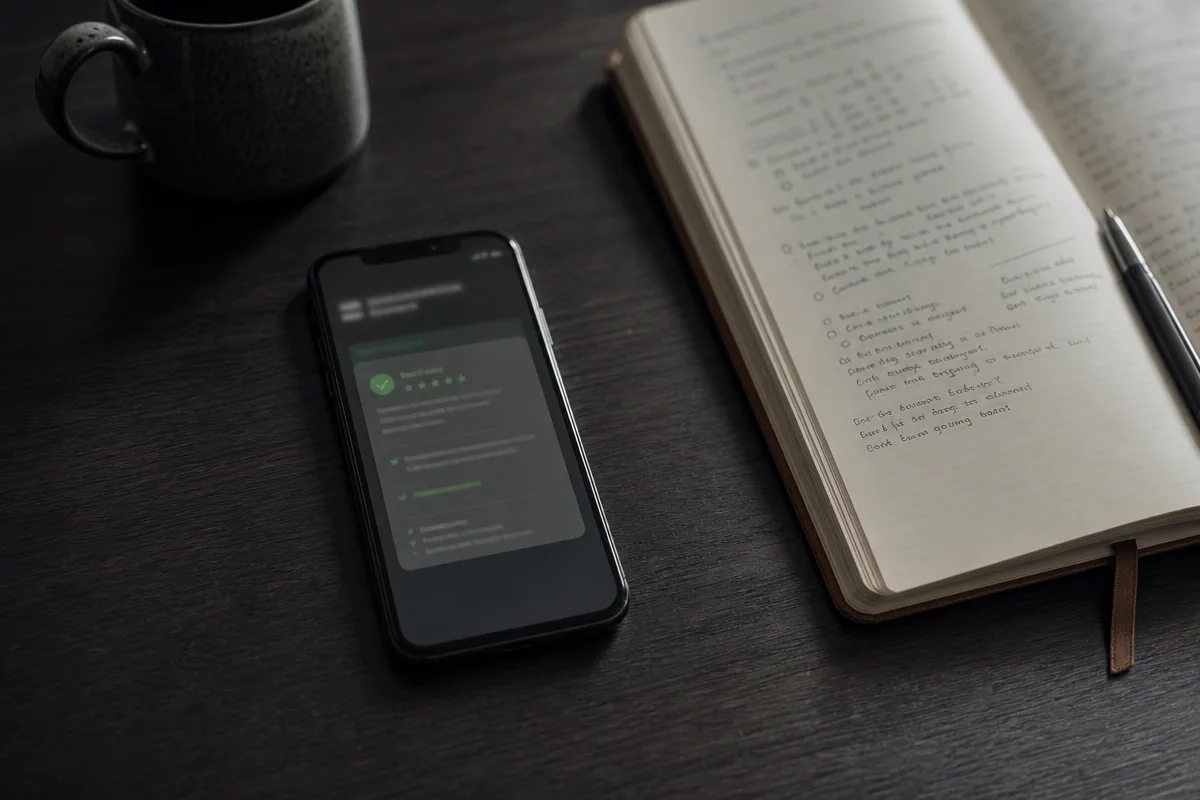
Name the treatment the reviewer already mentioned, thank them by first name, and keep it to two or three sentences. That’s the whole job. The temptation is to write something warm and generic. The problem with generic is that it does nothing for search, and it reads like it was copied from the last five replies, because it was.
Five-star, treatment named by the reviewer:
Thank you, [Name]! Really glad the [treatment] went well for you. See you at your next appointment.
Five-star, no treatment mentioned:
Thanks so much for taking the time to leave this, [Name]. It means a lot and we’d love to see you again soon.
Five-star, naming a member of staff the reviewer credited:
Thank you, [Name]! I’ll make sure [staff member] sees this, they’ll be thrilled. Looking forward to your next visit.
Keep the practitioner or staff member’s first name only, and only use it if the reviewer named them first. Never invent detail the review didn’t give you.
The Three and Four-Star Review With a Niggle
A three or four-star review is usually somebody who liked the outcome but had a genuine, specific gripe: the wait was long, the room was cold, the price wasn’t clear beforehand. These are the easiest reviews to reply to well, and the ones owners most often skip because they don’t feel urgent.
Four-star, with a niggle:
Thanks for the honest feedback, [Name]. Glad you’re happy with the result. Sorry about the wait on the day, that’s not what we aim for and I’ll look into it. Hope to see you again.
Three-star, mixed:
Thank you for taking the time to write this, [Name]. Sorry it wasn’t a five-star visit. I’d like to hear more so we can put it right, if you’re happy to call or email the clinic directly.
Both templates do the same three things: thank them, acknowledge the specific point without arguing it, and open a door to talk further. Don’t defend the price, the wait, or the room in the reply itself. Save that for the phone call, if they take you up on it.
How to Reply to a Negative Review Without Making It Worse
Acknowledge it, stay short, and move the real conversation offline. That’s the whole strategy, and it holds whether the one-star review is fair, unfair, or looks fake. What ruins a reply to a bad review almost every time is an owner trying to win the argument in public. Nobody reading it sides with the business that argued back, even when the business was right.
One-star, and the complaint is fair:
Sorry to hear this, [Name]. This isn’t the experience we want anyone to have. I’d really like to understand what happened, please call or email the clinic directly so I can look into it properly.
One-star, unfair or you suspect it isn’t a real client:
We take all feedback seriously, but we’re not able to match this review to anyone on our records. If you’d like to get in touch directly, we’re happy to look into it.
Notice what neither template does: it doesn’t say what treatment happened, doesn’t confirm or deny the reviewer was ever a patient or client, and doesn’t argue a single fact from the review. That restraint is the actual skill, and it’s worth its own section.
Can I Explain What Actually Happened in My Reply?
No, not in public, and this is the rule that catches out more clinics and salons than any other. It feels natural to want to correct the record when a review gets the facts wrong. Doing it in the replies usually breaks confidentiality instead.
Medical Protection’s guidance on this is blunt: treat a bad review like a complaint, investigate it properly, and respond to the substance of it privately, not in public where you can’t control who reads it or what it confirms. Even acknowledging that someone was a client, by name or by confirming a specific date or treatment, can be enough to breach confidentiality on its own, regardless of what they wrote about you first.
This matters more in a clinic than almost anywhere else. A salon replying to a bad haircut review has more room to describe what happened. A clinic replying about a treatment, a consultation, or a patient’s attendance does not, because that detail is exactly the kind of information a patient hasn’t consented to having discussed in public, even by implication. If in doubt, the safe reply never says more than “we’re not able to match this to our records” or “please get in touch directly.”
Should I Offer a Refund or Discount in My Reply?
Because whatever you offer becomes the going rate for anyone willing to leave a bad review, and it can look like you’re buying the review’s removal rather than fixing a real problem. The ASA’s rules on fake reviews are aimed at businesses paying for good reviews, but the same logic cuts the other way: a public refund offer, visible to everyone, invites more of the same behaviour rather than less.
If a refund or goodwill gesture is genuinely owed, agree it on the phone or by email, and keep the review reply itself limited to “please get in touch directly so we can put this right.” The outcome can still be generous. It just shouldn’t be public.
When Should You Flag a Review to Google?
Flag a review only when it actually breaks Google’s rules, not because it’s unflattering. Google’s own guidance is explicit about this: don’t report a review just because you disagree with it, Google won’t get involved in a dispute over whether the experience was fair, and only genuine content policy violations get removed.
Reasons worth reporting: it’s off-topic, it contains hate speech or harassment, it discloses someone’s personal information, there’s an obvious conflict of interest (a competitor, an ex-employee), or you have solid grounds to believe the reviewer was never a client. To report one, open your Business Profile, find the review, click the report icon, and choose the reason that fits. Google says human reviewers check flagged content, and you can appeal once if the first decision goes against you.
What flagging won’t do is make an honest, unflattering review disappear. For that, the reply is still the only lever you have.
Build a Google Reviews Reply Routine You Can Actually Keep Up

Pick one person to own replies, check for new reviews at the same time each week, and use the templates above as a starting point rather than a script. That’s the whole routine, and the reason most clinics and salons don’t manage it isn’t lack of templates, it’s that nobody owns the job and it falls between two people’s desks.
An internal complaints process helps here too, even outside the reviews themselves. CQC’s Regulation 16 requires registered providers to have an accessible way of receiving and acting on complaints, and a review that raises a genuine concern should feed into the same process as a complaint received any other way, not sit as a one-off reply and nothing else.
If you’re already stretched thin, this is exactly the kind of thing that quietly stops happening after the first few weeks. Resoclinx runs the review side of this for 297 a month: the funnel that asks happy patients automatically, and the alerts that tell you the moment a review needs a reply, so it isn’t something you have to remember to check.
Frequently Asked Questions
Should I reply to every Google review, even the good ones?
Yes. Replying to every review, not just the bad ones, is what the data actually rewards: BrightLocal’s Local Consumer Review Survey found 88% of consumers would use a business that replies to all of its reviews, against 47% for one that never replies. A five-star review with no reply is a missed chance to name the treatment and pull in the next search.
How do I reply to a negative Google review from a patient or client?
Keep it short, calm and generic in public: thank them for the feedback, say you take it seriously, and invite them to call or email so you can look into it properly. Never confirm they were a patient or client, never argue the facts in the replies, and never mention what was actually done or said. Take the real conversation offline.
Can I mention the treatment in my reply to a review?
Only if the reviewer named it first and you are replying to a five-star or positive review. Naming a treatment the reviewer already mentioned, in a reply to praise, helps the review rank for that treatment and town. Never confirm a treatment, appointment or attendance in reply to a negative review, even to correct it.
Should I offer a refund or discount in my reply to a bad review?
No. Offering money off in a public reply sets a precedent every other reviewer can see and try to claim, and it can read as buying a better outcome rather than fixing a real problem. If a refund is genuinely owed, agree it in a phone call or email, never in the review thread.
How do I report a fake Google review?
Open your Business Profile, find the review, click the report icon and choose the reason (spam, off topic, conflict of interest, personal information, or similar). Only report reviews that actually break Google’s rules. Reporting one you simply disagree with will not get it removed, and Google says as much itself.
How quickly should I reply to a Google review?
Aim for a few days, not a few weeks. Most consumers expect a reply within two to three days and almost all expect one within two weeks, according to BrightLocal’s research. A short, prompt reply beats a longer one that arrives a month late.
Get the Reply Habit Off Your Plate
You don’t need better templates as much as you need the reminder to actually use them. That’s the part that slips when you’re on the floor all day. If you’d rather it just happened, book a call and I’ll show you how it works: 30 minutes, no pitch.