What Can an AI Receptionist Do? (And What It Cannot Do)
An AI receptionist covers the moments your team physically cannot. It does not replace the receptionist. Here is what it does, what it does not, and how the two work together.
TL;DR
- Aesthetic clinics miss calls not because the team is bad at their job, but because the team is physically doing something else. It is a structural gap, not a staffing problem.
- An AI receptionist answers calls, handles missed-call text-back, qualifies enquiries, responds to WhatsApp and DMs, and proposes callback times, around the clock.
- It does not replace the receptionist. It covers the moments the receptionist physically cannot be available, so neither the in-person patient nor the caller loses out.
- Speed is the whole game. Leads are 21x more likely to convert when contacted within 5 minutes. The AI responds in seconds.
- The AI does not give clinical advice, does not decide treatment suitability, and does not book directly into your clinic software. Those jobs belong to your team.
One of our receptionists was mid-appointment with a client who was about to make payment. The phone started ringing.
She made a call most receptionists have to make several times a day. She let it ring out, knowing the AI receptionist would pick it up.
The caller was handled. A callback was scheduled. The client in front of her got her full attention through to payment without being made to feel like an interruption.
That is what an AI receptionist actually does. Not magic. Not replacement. Just coverage for the gap the team physically cannot fill.
This post explains what an AI receptionist can and cannot do for an aesthetic clinic, in plain terms.
Why Aesthetic Clinics Miss So Many Calls (and Why It Is Not the Receptionist’s Fault)
Aesthetic clinics miss calls because the team is doing something else, not because they are lazy or understaffed.
The phone rings during a treatment. During a consultation. At checkout. Over lunch. After hours. While someone is already on a call with another patient. In every one of those moments, the receptionist has a choice: abandon the person in front of them, or let the call go.
Most of the time, they let it go. Which is the right decision for the person in the room. But it is a costly one for the business.
UK small businesses miss 47% of initial calls, according to a telephone study of small businesses across the country. For the very smallest businesses, that figure rises to 62% of all inbound calls going unanswered.
And of those missed callers, 85% do not call back. They move on. Usually to another clinic that picked up.
This is not a people problem. It is an infrastructure problem. The team cannot physically be in two places at once. An AI receptionist does not solve this by replacing anyone. It solves it by being available for the call the team cannot take.
What Does an AI Receptionist Actually Do?
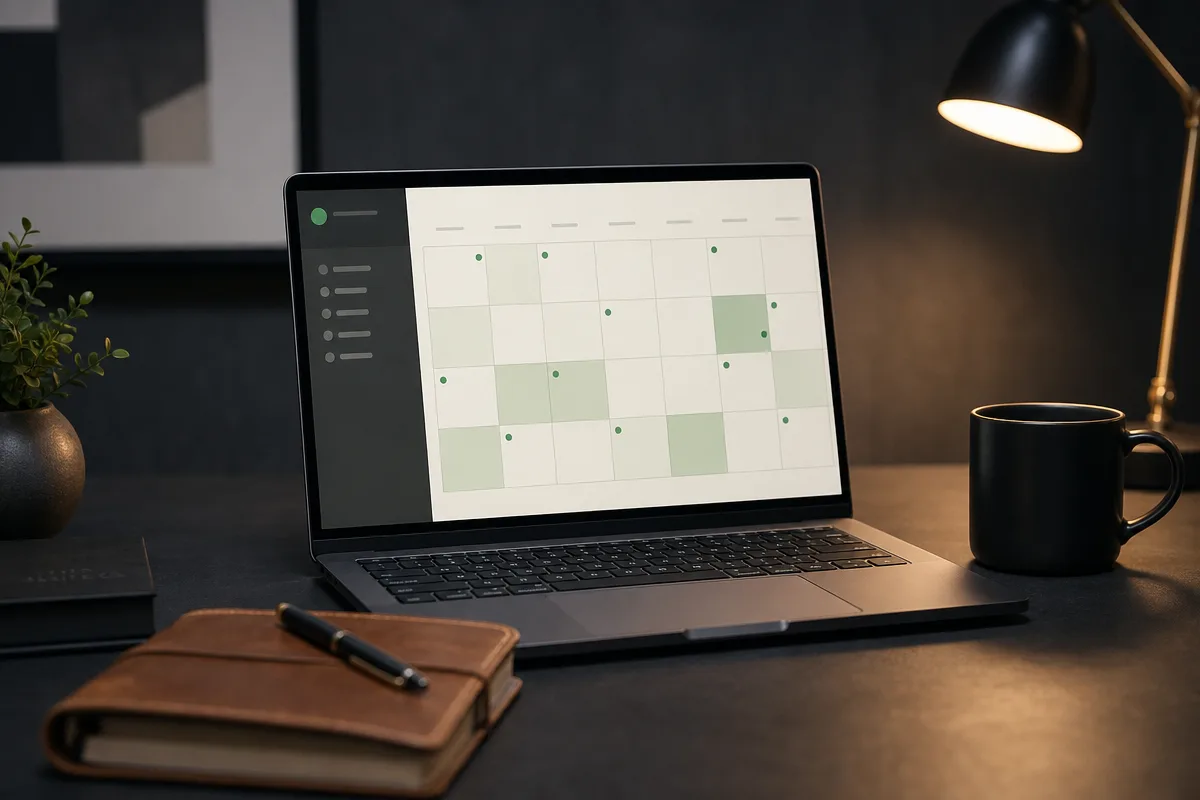
An AI receptionist answers inbound calls, handles missed-call text-back, qualifies the enquiry, answers routine front-door questions, and helps move the conversation towards a callback with a human.
More specifically, here is what it handles:
- Inbound calls: Picks up calls the team cannot get to, including after hours, at weekends, and during peak clinic hours.
- Missed-call text-back: If a call is missed for any reason, an automatic text goes back to the caller within seconds, acknowledging them and keeping the conversation open. Details on how this works are on the AI receptionist page.
- Qualifying questions: Asks about the treatment the patient is interested in, their situation, and what they are looking for, so the human team gets a warm handover rather than a cold call.
- Front-door questions: Answers routine questions about treatments, opening hours, pricing ranges, and clinic location without needing a human in the loop.
- Callback scheduling: Proposes callback times and helps move enquiries towards a conversation with the receptionist or practitioner, rather than leaving the patient waiting with no next step.
- Escalation: Anything clinical, sensitive, or outside the AI’s lane gets flagged to the human team immediately, with the full conversation history attached.
The AI never gives clinical advice and never quotes specific medical guidance. If a patient asks whether they are suitable for a treatment, or has a question that needs clinical judgement, the AI tells them a team member will be in touch and routes the message into the inbox with a flag. That handover model also fits how the JCCP code expects cosmetic practitioners to handle anything clinical.
It Also Handles WhatsApp, DMs and Web Enquiries
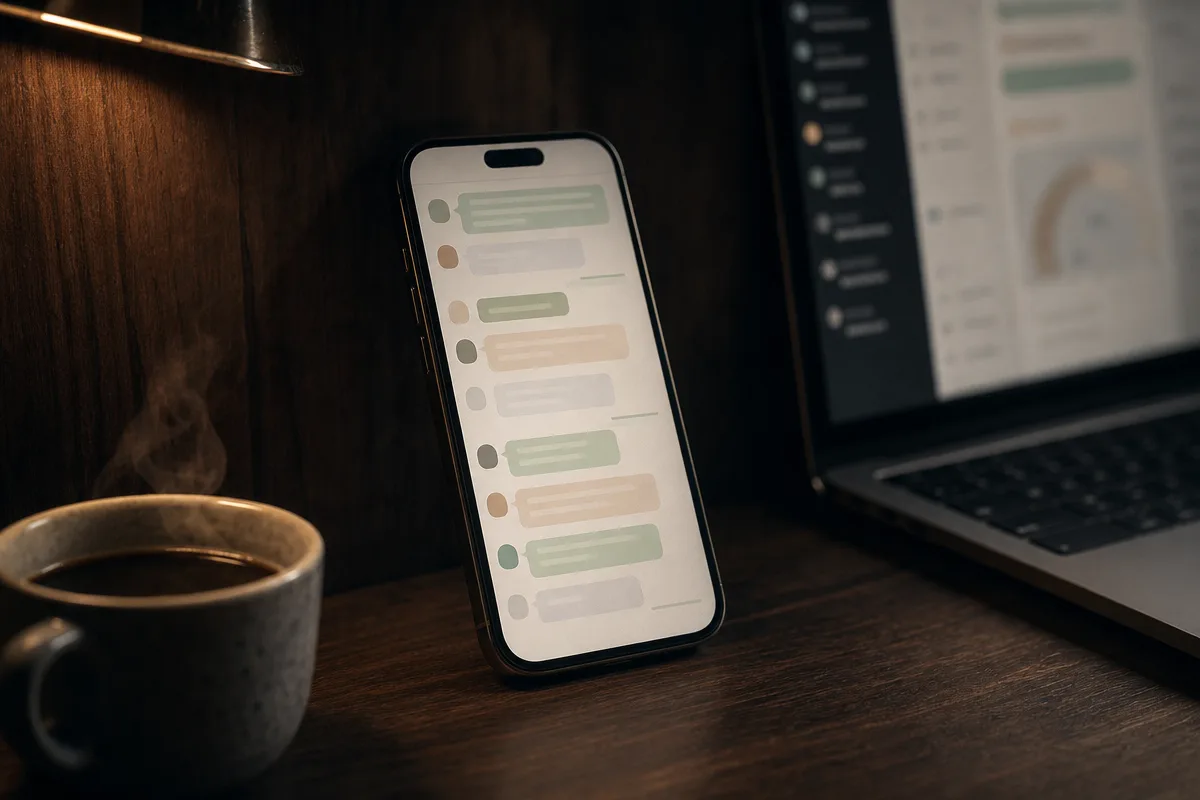
Calls are only part of the picture. Most aesthetic clinics are also fielding WhatsApp messages, Instagram DMs, web form submissions, and enquiries through Google Business Profile, often across several apps at once.
The WhatsApp chatbot handles WhatsApp enquiries in the same way the voice AI handles calls: it gathers basic information, answers routine questions, and moves the patient towards a callback with the team. Where relevant, it can also support treatment-area photo uploads so the team has context before the conversation starts.
The wider point is that lead capture pulls every enquiry channel into one place, so calls, forms, DMs, WhatsApp messages, and GBP enquiries are all visible in a single inbox rather than scattered across five different apps. Nothing sits cold because it landed in the wrong place.
Why Speed Is the Whole Game
Why does response time matter so much for aesthetic clinic enquiries?
Because the person who just sent a WhatsApp about lip filler or skin treatments made that decision in a specific moment. They are curious now. They are ready to book a call now. If they do not hear back within minutes, that moment passes. They look at another clinic. They talk themselves out of it. They forget they even enquired.
Research consistently shows that leads contacted within 5 minutes are far more likely to convert than those contacted after 30 minutes. In healthcare specifically, the gap is even sharper, with leads contacted at the 5-minute mark up to 21 times more likely to convert.
Most patients have very little patience for being held up either. Surveys of healthcare consumers show that most are unwilling to wait longer than two minutes on hold before becoming frustrated. For a clinic competing for patients in a local area, a slow response is not a slow response. It is a lost patient.
An AI receptionist responds within seconds. Not because the AI is better than a human receptionist, but because the AI is not juggling four other things at the same time.
There is also an after-hours dimension that matters specifically for aesthetics. Patients research treatments in the evening and at weekends, often after seeing a friend’s results or an ad on Instagram. If they call at 8pm on a Sunday and get voicemail, most of them will not leave a message. They will scroll on. The AI picks up that call, sends an instant text-back where calls drop, and keeps the conversation alive until the team is back. Text remains the right channel for that follow-up because SMS still hits a 98% open rate.
What an AI Receptionist Does Not Do
What should an AI receptionist not be expected to handle?
Quite a lot, and it is worth being direct about this because the expectations around AI are often either too high or wildly misplaced.
It does not give clinical advice. It does not tell a patient whether they are a good candidate for a treatment, what dose they might need, or how to manage a side effect. That is clinical judgement. It belongs with your practitioners, not a piece of software.
It does not book directly into your clinic software. Resoclinx sits in front of existing systems like Pabau, Fresha, Vagaro, Mindbody, and AestheticsPro rather than replacing them. The AI captures the enquiry, qualifies the lead, and proposes a callback time. The human receptionist then calls the patient, has the closing conversation, and books them into the clinic diary. This keeps your records clean and prevents the kind of fragile direct-booking issues that cause duplicate entries and scheduling errors.
It does not replace your receptionist. This point is worth saying plainly because it is the question every clinic owner asks first. The AI handles the high-volume, routine work: instant first responses, qualifying questions, after-hours coverage, missed-call text-back, follow-up sequences. The receptionist handles the moments that need a human: greeting a patient in person, having the consultation conversation, providing reassurance, managing complaints, and using their own judgement.
The goal is not to cut headcount. It is to stop the receptionist drowning in DMs and missed calls so they can be genuinely present for the patient in front of them.
The AI Receptionist and the Human Receptionist: How They Work Together
I want to come back to the story I opened with, because it makes the dynamic clearer than any list of features.
The receptionist had a client at the desk. The client was about to pay. That is a moment that needs her full attention. The client was in a hurry. The last thing either of them needed was for her to answer a call, try to qualify a new enquiry, and ask the client in front of her to wait.
She let it go to the AI. The AI picked it up, handled the caller, and scheduled a callback for when the team was free. The client paid and left. The caller was captured.
Nobody lost.
That is the working relationship. The AI is not smarter than your receptionist. It is just available when she is not. Front desk teams in aesthetic clinics regularly juggle check-ins, checkouts, reschedules, walk-ins, and calls at the same time. The AI absorbs the overflow so the receptionist can stay focused on the patient in front of them.
In practice, this is what that looks like:
- A patient calls at 7pm. The AI answers, takes the enquiry, proposes a callback for 9am the next morning, and logs everything.
- A WhatsApp message comes in during a busy Saturday morning. The AI responds within seconds, answers the basic questions, and moves the conversation towards a booking call.
- A patient submits a web form at midnight. The AI sends an acknowledgement, asks a couple of qualifying questions, and has the full enquiry ready in the inbox by the time the team arrives.
In each case, the human receptionist picks up a warm, logged, qualified lead. Not a cold voicemail. Not a DM that sat unread for three hours.
What Happens After the AI Receptionist Answers?
What happens to the enquiry after the AI picks it up?
It does not just get logged and left. The enquiry enters a structured process. If the patient books a callback and then does not show, automated follow-up runs in the background: a soft check-in, a value message, a gentle nudge back towards booking. The human team can see every conversation in the inbox and step in at any point.
If a patient enquires but never books at all, the follow-up sequence continues over the following days and weeks, quietly. Not with spam, but with the kind of measured contact that keeps the clinic front of mind until the patient is ready.
The result is that enquiries stop disappearing into a gap between “the AI picked up the call” and “the receptionist is free.” They stay in the system, tracked, followed up, and visible.
How to Tell If You Need One
Most clinic owners who ask what an AI receptionist can do are really asking a different question. They are asking whether it is worth it. Whether the team will use it. Whether it will sound robotic. Whether it will cause more problems than it solves.
Those are fair questions. But the more useful starting point is to ask how many enquiries are going cold right now, while your receptionist is doing exactly what she should be doing: looking after the patient in front of her.
If you want to find out where your clinic is leaking enquiries, keep a tally for one week: every call, DM and form, and what happened to each one afterwards. It is duller than a tool and it is more accurate.
Want me to look at yours?
Thirty minutes with the person who would build it. Tell me what you do and where the work comes from now, and I will tell you straight whether a rebuild would change anything. If it would not, I will say so.
Book a callNot ready for a call? Take the slow road. One short email every Tuesday from Surinder: one thing to check on your own website, phone line or reviews. Five minutes, no ads.