
Google Business Profile Optimisation for Aesthetic Clinics: The Owner's Checklist
A practical, owner-led checklist for getting your aesthetic clinic's Google Business Profile to actually pull in local enquiries, ordered by what moves the needle first.
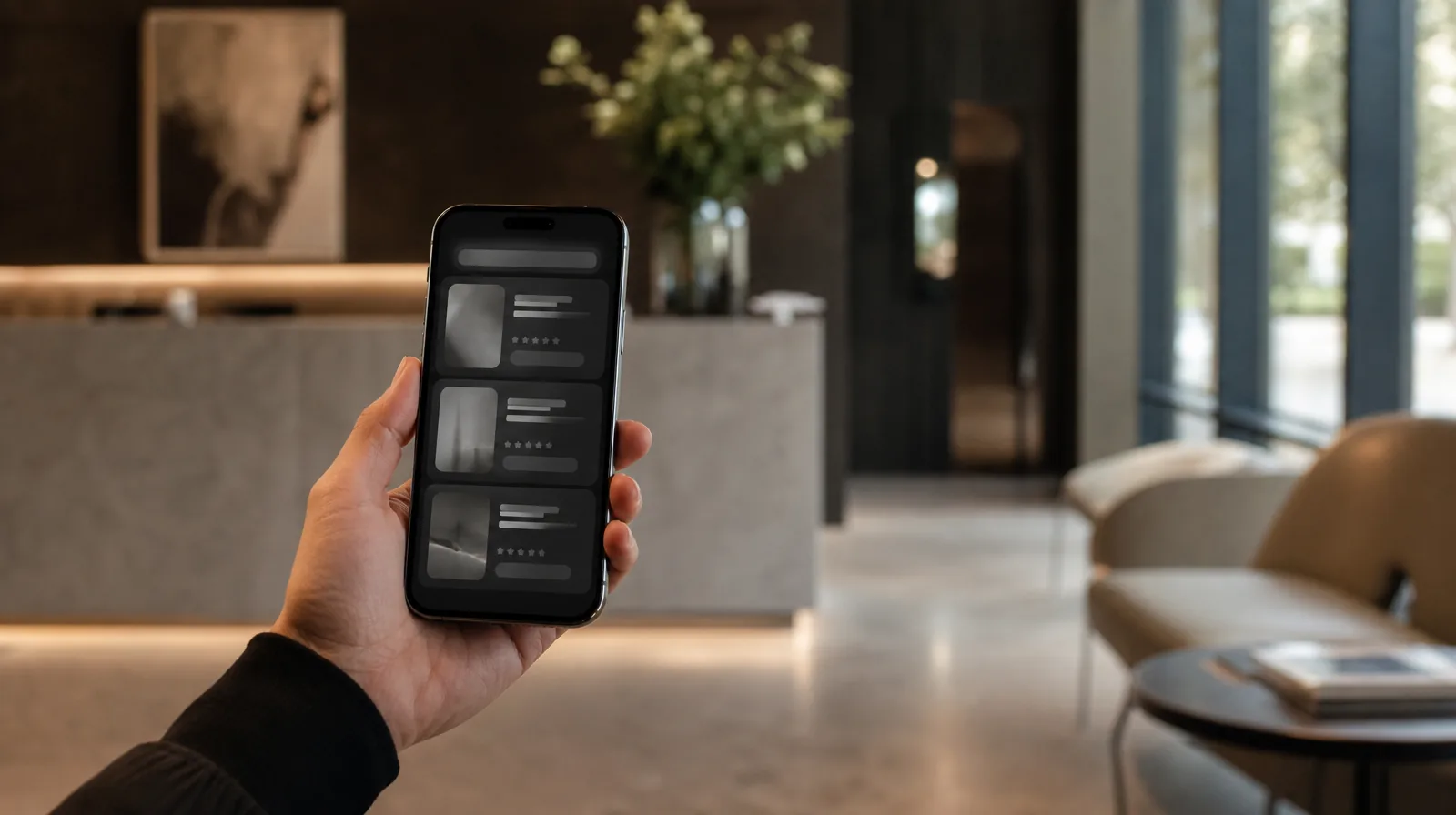
TL;DR
- Google Business Profile is the single biggest local visibility lever an owner-led aesthetic clinic has.
- The wins come from boring fundamentals done in order, not one-off tactics or “secret” hacks.
- The order that matters: verify, fix categories, complete services, swap stock photos for real clinic photography, run a review engine, post weekly, answer messages fast.
- Most clinics can fix the foundations in a weekend and see meaningful local impact inside 90 days.
- A weak profile is usually a symptom of digital being treated as an afterthought, not a Google problem.
If you run an aesthetic clinic and you can’t see your own business in the Google map pack for searches a real local patient would type, the cause is rarely bad luck. It’s almost always that Google Business Profile optimisation has been left half-finished for years.
I have rebuilt the local presence for clinics in Reading, West London and Derbyshire. The biggest single lever in every case was not the website, and it was not paid ads. It was Google Business Profile, fixed properly, then kept alive with reviews, photos and posts. Reading went from struggling to be found locally to roughly a 30% local visibility uplift inside six months. Derbyshire moved location, started with virtually no local visibility, and rebuilt to roughly a 30% uplift inside three months.
This is the owner’s checklist I follow when doing GBP optimisation for an aesthetic clinic. No fluff. Just the order things need to happen in.
What Is Google Business Profile Optimisation for an Aesthetic Clinic?
It’s the work of getting your clinic’s free Google listing to actually pull in local patients: correct categories, full services, real photography, fresh weekly posts, a steady stream of reviews and answered questions. It’s the front door to local search, and for a clinic where most patients live within a 20-minute drive it usually outperforms every other free channel for early-stage enquiries.
Done properly, your profile shows up when someone searches “Botox near me” or “skin clinic [town]”, and the listing earns the click because it looks alive and trustworthy. Done badly, the listing is technically online but invisible.
Why Is GBP the Single Biggest Local Lever You Have?
Because most local searches are settled inside the map pack before anyone visits a website. According to BrightLocal’s read reviews survey, the vast majority of consumers read online reviews regularly, and Google is by far the dominant platform they read on. The decision to call you, walk in or scroll past usually happens on the listing itself.
Whitespark’s 2026 ranking factors report puts Google Business Profile signals among the most influential drivers of local pack placement, alongside proximity and reviews. In other words, two clinics three streets apart will not rank evenly. The one with the cleaner profile, the steady review flow and the active posts wins.
To be honest, this is the part too many clinic owners miss. Many invest heavily in fit-out, equipment and brochure-style websites, then treat the profile, local SEO, content and review building as secondary. The result is often a professional-looking clinic that is almost invisible online.
What Should You Verify Before Anything Else?
Verification first, every time. Prove to Google you are who you say you are, by video, postcard or business credentials. Once verified, lock down the basics: legal business name (no extra keywords stuffed in, that is against Google’s profile policies), exact address as it appears on signage and utility bills, opening hours including bank holidays, primary phone number, website URL and a single canonical short description.
This is the part nobody finds exciting and nobody can skip. If two listings exist for the clinic (an old one from a previous tenant, a duplicate from a third-party agency, a fake address from a virtual mailbox), they need to be merged or removed. Conflicting NAP signals confuse Google and quietly drag rankings down.
Which Categories Should an Aesthetic Clinic Pick?
Pick the most specific primary category Google offers for what you actually do, then add up to nine secondaries. Your primary category is the single most important field on the profile. Get it right and you become eligible for the right searches. Get it wrong and you simply do not appear.
For most aesthetic clinics, the primary category is “Medical Spa” or “Skin Care Clinic”. For laser-led clinics, “Laser Hair Removal Service” can pull better than a generic “Beauty Salon”. A typical UK aesthetic clinic might run:
- Primary: Medical Spa
- Secondaries: Skin Care Clinic, Facial Spa, Laser Hair Removal Service, Beauty Salon, Hair Removal Service
If you don’t actually deliver one of these treatments, don’t add the category. Google rewards relevance, not category-stuffing. Review your categories every six months as your menu changes.
How Should You Build Out the Services Section?
List every treatment you actually offer with a short, specific description and a price band where you can. Inside the profile there’s a Services section most clinics ignore. Don’t.
“Lip filler 0.5ml from £150, 30 minutes, includes 2-week review” is far stronger than just “Lip filler”. WebFX’s summary of ranking signals makes the point cleanly: profile completeness is one of the simplest, most controllable signals you have. Match the services on your profile to the services on your website word-for-word where possible. Mismatched menus split your visibility across two surfaces.
What Kind of Photos Should You Upload, and How Many?
Real ones. Lots of them. Stock photos of identikit treatment rooms, generic models and white-coat doctors with crossed arms tell every patient browsing your profile that the photo is not your clinic. Real photos of the building, the entrance, the reception, the treatment room, the team and the equipment do the opposite.
Aim for 20 to 40 high-quality clinic photos at launch, then add 2 to 4 fresh ones every month. A profile with 80 photos all uploaded three years ago does not signal the same thing as one with steady uploads in the last six weeks. Resist before-and-after shots on the public profile unless you have written, GDPR-compliant patient consent for each one. On a small phone screen they often look worse than they do in your portfolio.
How Do You Get a Steady Stream of Google Reviews?
By making the request automatic, fast and tied to a moment in the patient journey. If you only do one thing on this list, do this. Whitespark’s analysis of review recency makes the point bluntly: a business with 200 reviews and none in the last six months now ranks below a business with 80 reviews and a steady weekly flow.
That is why this can’t sit on the front-desk team’s memory. It has to be a system. The fix is what Local Falcon calls review velocity: a steady, automated request triggered at the right point in the patient journey, sent through the channel the patient already uses. Search Engine Land’s review strategy guidance backs this up: ask immediately after the moment of value, not weeks later.
I’ve seen this work in practice. One clinic in West London had poor reviews and weak local trust. We turned on automated review collection from the existing patient database, asking happy patients at the right point. Inside three months they collected over 200 Google reviews and the enquiry volume followed. That is the kind of compounding lift you cannot fake. The full workflow lives on our review management page.
A few practical rules for the request itself:
- Ask within 24 hours of the treatment.
- Send by SMS or WhatsApp, not email, where possible.
- Respond to every review, positive and negative, inside 48 hours.
- Don’t bulk-send 80 requests in one day after months of silence. Sudden bursts look unnatural to Google.
How Often Should You Post on Google Business Profile?
Once a week is plenty. The honest answer is that the evidence on whether GBP posts directly move rankings is mixed, and Google itself doesn’t list posts as a primary signal. They still earn their place because they keep the profile looking actively maintained, and they pull click-throughs from people already on your listing.
A short post every week is fine: a treatment of the month, a team update, an offer, an open day, a new piece of equipment. Hopefully that sounds boring. It should. The clinics that win this are not writing viral content here. They are simply refusing to let the profile go quiet.
How Fast Should You Respond to GBP Messages?
Inside an hour, ideally inside a minute. Speed kills enquiries faster than any algorithm. A patient who messages your profile at 7pm on a Tuesday and gets a reply at 11am on Wednesday has usually already messaged two other clinics by then. Google watches engagement signals (clicks, calls, messages, direction requests, photo views), and slow response makes them flatten.
For most clinics this is where an AI receptionist earns its keep. The AI catches the message, answers the routine question, qualifies the patient and proposes a callback time, all inside a minute. The team then closes the booking warmly the next morning. The AI doesn’t replace the receptionist. It just removes the team from the first-response layer so nothing sits cold overnight.
Same rule applies to the Q&A section on your profile. Pre-answer the obvious questions yourself (“Do you offer 0% finance?”, “Do you take walk-ins?”, “How much is Botox?”) so a competitor or random user can’t answer them for you.
What Happens 30, 60 and 90 Days After You Fix the Profile?

Different things lift at different times, and that’s worth setting expectations on properly.
- First 30 days: profile insights start moving first, mostly impressions and direction requests. Engagement on photos picks up. Review velocity builds if the request system is wired in. The phone may not look very different yet.
- 30 to 60 days: local pack rankings for less competitive treatment terms start sliding upward. The Reading clinic I worked with sat in this window. GBP fixed, local SEO tightened, automated review collection running. By month three they were finding more customers. By month six the visibility uplift was around 30%.
- 60 to 90 days: competitive terms (“Botox [town]”, “lip filler near me”) start to move. The Derbyshire clinic moved into a brand new location with virtually no local presence. We rebuilt the profile, added new clinic photography, started weekly posts, automated review collection and put an AI front-of-house layer with missed-call text-back in front of the team. By month three the local visibility was up around 30%, and missed calls and WhatsApp leads were no longer being left cold.
Search Engine Land’s GBP audit framework is a sensible way to keep checking the work. Review the same 5 to 7 metrics every month rather than chasing daily fluctuations. Local rankings are noisy week to week. The trend is what matters.
Why Do Aesthetic Clinic Profiles Get Suspended?
Healthcare-adjacent profiles get held to a tougher standard, so a few specific traps are worth flagging:
- A keyword-stuffed business name like “Oxford Aesthetic Clinic, Best Botox in Oxford”.
- A virtual address with no real signage or staffed hours.
- Duplicate listings from previous owners or franchise periods.
- Sudden, large changes to address, name or phone after years of stability.
- A practitioner profile and a clinic profile pointing at the same address with conflicting categories.
Stay inside Google’s published guidelines, fix duplicates before they’re flagged, and your suspension risk drops dramatically. If a profile does get suspended, follow Google’s own guidance, gather signage and utility-bill evidence and appeal cleanly, rather than trying to spin up a new listing in parallel.
Can You Actually Fix All of This in a Weekend?

Yes, if you treat it like a project rather than a chore. Here is the realistic two-day plan:
Saturday morning, around 3 hours. Verify the listing, fix the name, address and hours, set the right primary category and add 6 to 8 secondaries, then list every treatment as a service with a short description and a price band.
Saturday afternoon, around 2 hours. Take 30 to 40 fresh photos around the clinic on a phone: exterior, reception, treatment room, equipment, team. Upload them in batches.
Sunday morning, around 2 hours. Write the first 4 GBP posts (one per week, scheduled), pre-answer 8 to 10 questions in the Q&A, and write a default reply template for positive and negative reviews.
Sunday afternoon, around 1 hour. Wire up the review request system so every patient who completes a treatment gets a message asking for a Google review within 24 hours. If you can’t set the automation right now, do the manual version this weekend and book a calendar block to set up the automation in the next two weeks.
That’s roughly 8 hours over two days. Slow at first, then it compounds.
Where Does GBP Fit in the Bigger Picture?
Google Business Profile is the front door, not the whole house. The wins above only stick if there’s a real system catching the enquiries that come through it: missed calls answered, DMs replied to, follow-up running, reminders sent, no-shows chased back. That is the second half of the job at Resoclinx, the way we structure clinic growth around capture, local trust, smart marketing and operating systems.
If you would rather not run this yourself, the review funnel is part of what Resoclinx builds and runs, at one flat monthly rate with no minimum term and the price on the page. Or just take the checklist above and run it yourself this weekend, which costs nothing. Either way, the next 90 days are when most of your competitors are not doing this.
Want me to look at yours?
Thirty minutes with the person who would build it. Tell me what you do and where the work comes from now, and I will tell you straight whether a rebuild would change anything. If it would not, I will say so.
Book a callNot ready for a call? Take the slow road. One short email every Tuesday from Surinder: one thing to check on your own website, phone line or reviews. Five minutes, no ads.