AI Phone Agent vs Human Receptionist: Cost, Coverage, Trust
An AI phone agent and a human receptionist are not rivals, they cover different shifts. Here is the honest comparison on cost, coverage and trust for an owner-led aesthetic clinic.
TL;DR
- An AI phone agent and a human receptionist are not competitors. They cover different shifts, so the real question is which one belongs where.
- On cost, a human receptionist runs into tens of thousands a year once you add holiday and sickness cover. An AI phone agent is a flat monthly fee with no per-call charge.
- On coverage, AI wins easily. It answers at 8pm on a Saturday, during a treatment, and when the phone rings three times at once.
- On trust, a human still wins the warm, sensitive and clinical moments. The best setup puts AI on the calls people cannot get to and keeps humans for the calls that need them.
If you run an aesthetic clinic and you are weighing an AI phone agent against another front desk hire, the honest answer is that you probably need both, doing different jobs. I have spent 20 years on the clinic floor, and the calls a clinic loses are almost never lost because the receptionist is bad. They are lost because nobody could physically pick up. That is the gap an AI phone agent fills, and it is the lens this whole comparison runs through: cost, coverage and trust.
Let me walk through each one plainly, with real numbers where I can, so you can decide what fits your clinic.
What Is an AI Phone Agent?
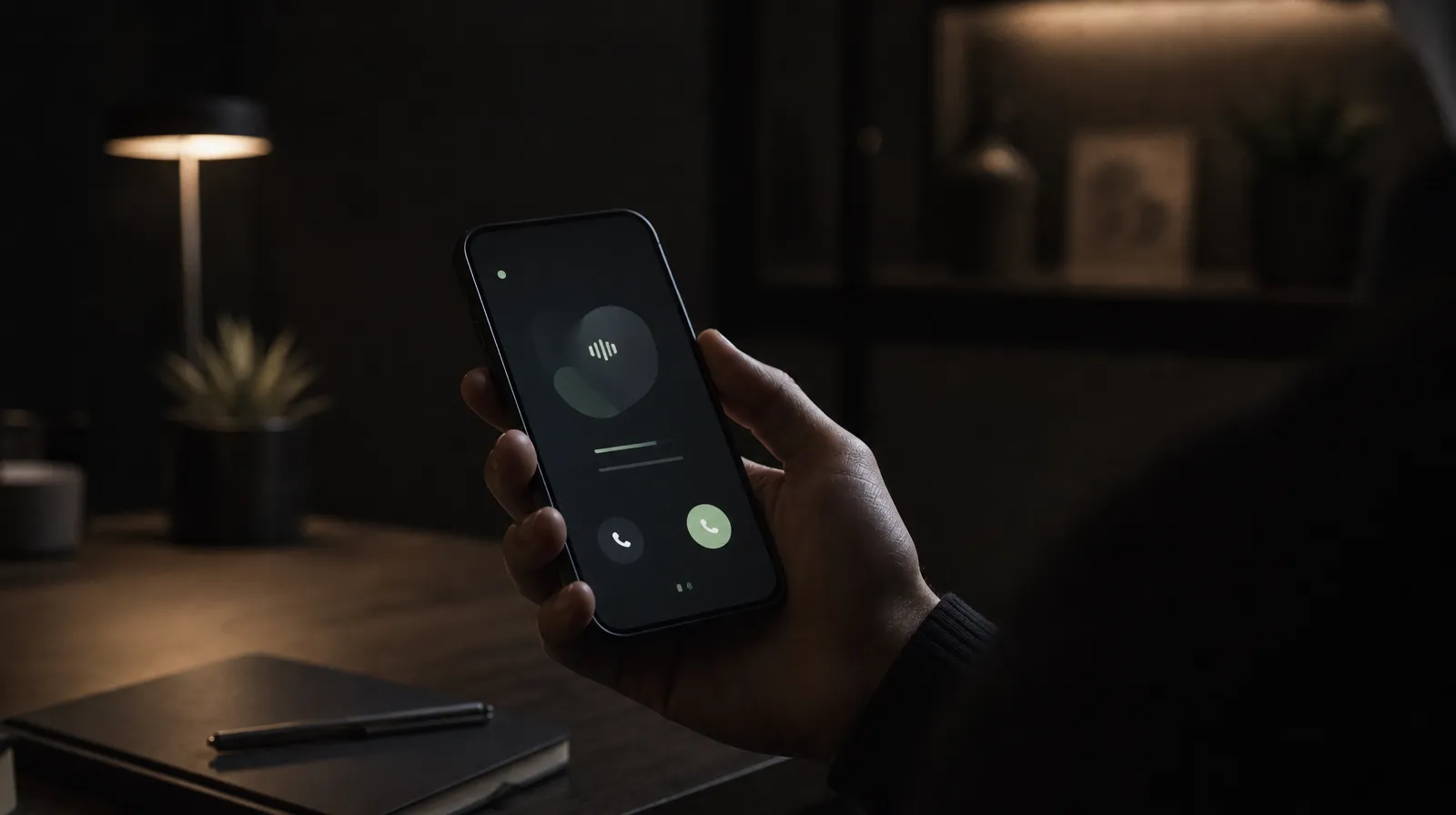
An AI phone agent is software that answers your clinic phone, talks to the caller in natural speech, qualifies the enquiry and books a callback. It is not a recorded menu and it is not a chatbot pretending to be a person. Modern voice systems hold a real back-and-forth conversation, handle multi-turn questions, and pass anything they should not handle to a human with the full conversation attached.
For a clinic, the job is narrow and useful. The agent picks up when the line is busy or the clinic is closed, answers the front-door questions (“do you do lip filler”, “where are you”, “what are your hours”), takes the caller’s details and offers a callback time. It does not diagnose, it does not give treatment advice, and it does not pretend to be a nurse. Think of it as a very fast, very consistent first responder, not a replacement for your team.
AI Phone Agent vs Human Receptionist: The Honest Comparison
Here is the short version before the detail. Each option wins on different things, and pretending otherwise helps nobody.
| Factor | AI phone agent | Human receptionist |
|---|---|---|
| Cost | Flat monthly fee, no per-call charge | Salary plus on-costs and cover |
| Coverage | 24/7, never busy, never off sick | Business hours, one call at a time |
| Speed | Answers in seconds, every time | Fast when free, slow when stretched |
| Warmth | Consistent and polite | Genuinely human and reassuring |
| Judgement | Escalates anything sensitive | Handles nuance and clinical calls |
| Booking | Captures and qualifies, hands to the team | Closes the booking in person |
The pattern is clear once you see it side by side. AI is strongest on the mechanical, always-on work. A human is strongest on the moments that need a real person. A good AI receptionist setup uses that split rather than fighting it.
How Much Does a Human Receptionist Cost?
A full-time receptionist in the UK costs more than the headline salary, usually well over £30,000 a year once you add everything up. Indeed puts the average receptionist salary at around £31,000, and Reed and PayScale land in a similar band depending on region and experience. London sits higher again.
That salary is only the start. On top you carry employer National Insurance, pension contributions, paid holiday, training time and the cost of covering sickness and lunch breaks. A single receptionist also gives you single-point cover. When she is on the phone, the next caller waits. When she is off, the desk is quiet.
None of this is an argument against hiring people. A great receptionist is one of the best investments a clinic makes. It is an argument for being honest about what one person can realistically cover, and where the phone keeps ringing into empty air.
How Much Does an AI Phone Agent Cost?
An AI phone agent is a flat monthly fee, which makes it easy to budget. There is no per-call charge and no overtime, so a quiet month and a busy month cost the same to run. Resoclinx is a simple flat monthly rate, and you can see the current numbers on a short call rather than take my word for it.

It helps to know how the alternatives bill. Traditional live answering services usually charge per minute or per call, and then add surcharges for nights and weekends, which is exactly when a clinic most needs the cover. AI answering does not work that way, because there is no extra staff cost for a 2am call.
A quick word on what the monthly fee does not include. You still pay the usage cost of the texts, emails and call minutes the system sends, though for most clinics that runs to a small amount each month. I would never describe this as the all-in price, because that would not be straight with you. The point is simpler: the cost of an AI phone agent is small and predictable next to a salary, and it does not stop working at 5pm.
Coverage: Who Answers at 8pm on a Saturday?
Coverage is where the gap is widest, and it is the reason most clinics look at this in the first place. A patient who has been thinking about a treatment all week often calls in the evening or at the weekend, which is precisely when the desk is unstaffed.
The numbers around speed are blunt. Harvard Business Review found that contacting a lead within five minutes makes you 100 times more likely to reach them and 21 times more likely to qualify them than waiting half an hour, yet the average business in that study took 42 hours to respond. Speed is so decisive that the first responder tends to win the booking. In healthcare the patience runs out fast too: callers start hanging up after roughly 90 seconds on hold.
Here is the part I have watched again and again on the clinic floor. When a call goes unanswered, most people do not leave a voicemail and they do not try again later. They ring the next clinic on the list. That is a booking gone, and it never shows up in any report, which is what makes missed calls so expensive. One single-location clinic I worked with saw booked consultations rise by around 20 to 30 percent month on month, simply because every enquiry started getting a structured response within five minutes instead of being left cold.
A human cannot be on the phone at 8pm on a Saturday and in two places at once during a busy Tuesday clinic. An AI phone agent can. That is not a small advantage, it is the whole point of having one.
Trust: Will Patients Accept an AI Voice?
Most patients accept an AI voice for routine calls, as long as it is honest about what it is and hands over cleanly when the question gets personal. The trust problem appears when a clinic tries to make AI do a human’s job, not when it uses AI for the right calls.
Be realistic about the limits. Voice systems are strong on predictable, structured calls like bookings and FAQs, and they get shaky off-script or on emotionally loaded conversations. A nervous first-time patient asking whether a treatment is safe for them does not want a machine. She wants a person. The fix is a clean handover: the agent answers what it can, then routes the sensitive or clinical questions to your team with the full context, which good systems are now built to do through a human handoff.
This is also why I will never tell a clinic that AI will replace the receptionist. It will not, and it should not. A warm automated reply that lands in two minutes is a better patient experience than a manual reply the next morning, but the human moments still belong to humans. If you want the agent to handle voice calls specifically, that is the job of an AI voice agent, with everything sensitive escalated to a person.
What the Best AI Phone Agent Does (and Does Not Do)
The best AI phone agent for a clinic is the one that knows its lane and stays in it. Feature lists are a distraction. What matters is whether the agent captures the enquiry, qualifies it, books a callback and hands the rest to a human without dropping anything.
So the things it should do well are simple and few. It answers every call, day or night. It asks the right qualifying questions for your treatments. It logs the conversation and routes it to your team. It offers a callback time so the patient is never left hanging.
Just as important is what it should not do. It should not give clinical advice or decide whether a treatment is suitable. It should not bluff an answer it does not know, it should flag it for a human instead. And it should not book directly into your clinical diary. The cleaner pattern is for the agent to capture and qualify, then your receptionist closes the booking in your existing software, which keeps your patient records tidy. Any tool promising guaranteed bookings or a clinic that runs itself is overselling, and you should treat that as a warning sign.
The Setup That Actually Works
After 20 years of building and running clinics, the setup I trust is not AI or humans. It is AI on the shifts people cannot cover, and humans on the floor where they belong.
In practice that means the agent takes the overflow, the missed calls, the evenings and the weekends. Your receptionist takes the in-person greeting, the consultation conversation, the reassurance and anything clinical. The first response is automated so it is instant, then a real person carries on the relationship. This is securing every enquiry: you stop the leak first, then build on top.
The other half is what happens after the call. A captured enquiry still goes cold if nobody follows up, so the agent should feed straight into automated follow-up that nudges the patient until they book or clearly say no. AI to catch the call, automation to keep it warm, a human to close it. That is the order that works.
How to Decide for Your Clinic
You do not need a spreadsheet for this. Run through a few honest questions.
- How many calls go to voicemail each week, especially in the evening and at weekends? If you do not know, that is your answer.
- Is your receptionist regularly too busy to pick up during clinic hours?
- Do enquiries come in outside 9 to 5, which for aesthetics they almost always do?
- Do you have a follow-up system, or do unbooked enquiries just disappear?
If most of those point at a gap, an AI phone agent is the cheaper and faster fix, and it does not mean letting anyone go. If your phones are genuinely well covered all week and nothing slips, you may not need one yet. Be honest with yourself, because the leak is usually bigger than owners think.
Where to Start
Start by finding out where calls are actually leaking, not by buying software. Map a normal week: how many calls come in, how many get answered live, how many land out of hours, and what happens to the ones that miss. Once you can see the gap, the choice between an AI phone agent and another hire stops being a guess and becomes obvious.
If you want help mapping that, the team is happy to walk through your clinic’s numbers and show you where the bookings are slipping, with no pressure to buy anything. Fix the leak first. The rest gets a lot easier after that.
Want me to look at yours?
Thirty minutes with the person who would build it. Tell me what you do and where the work comes from now, and I will tell you straight whether a rebuild would change anything. If it would not, I will say so.
Book a callNot ready for a call? Take the slow road. One short email every Tuesday from Surinder: one thing to check on your own website, phone line or reviews. Five minutes, no ads.